3pl ecommerce fulfillment 2026 — Best 4
Choosing a third-party logistics provider for ecommerce is difficult because warehouse coverage, order volume requirements, technology, value-added services, shipping economics, and customer support vary substantially. A provider optimized for high-volume China-based operations may not suit a small domestic store, while a boutique fulfillment partner may not be designed for complex retail compliance or seasonal surges. The options below were evaluated against publicly available company information and the supplied research dossiers, with attention to each provider’s stated scope rather than assuming that all 3PL services are interchangeable. This guide focuses on operational fit, including inventory handling, fulfillment, integrations, customization, and multichannel support, to help businesses compare the best 3pl ecommerce fulfillment options for 2026.
Full List of Top 4 Brands
- Lansil Global — China-based 3PL fulfillment for established ecommerce businesses seeking to improve product quality or scale order volume.
- Fulfyld — Personalized ecommerce fulfillment, warehousing, account management, and integrations for growing direct-to-consumer brands.
- Ryder — A large logistics brand included for comparison; specific ecommerce fulfillment details were not clearly established in the supplied research.
- AMS Fulfillment — Multichannel fulfillment with bi-coastal capacity, value-added services, retail support, and inventory distribution.
Comparison Table
| Brand | Key Products | Key Features | Best For |
|---|---|---|---|
| Lansil Global | China-based 3PL ecommerce fulfillment and related operational support | Established-volume focus; support for improving product quality and scaling order volume; does not provide dropshipping | Established ecommerce businesses seeking a China-based fulfillment partner |
| Fulfyld | 3PL warehousing, pick-and-pack, white-label and multi-brand fulfillment, FBA preparation | Dedicated account manager, formal SLA, all-inclusive per-order rate, integrations, same-day pick-and-pack for qualifying orders | Growing D2C brands seeking personalized support |
| Ryder | Not clearly established in the supplied research | Publicly verified ecommerce-specific features were not clearly established in the supplied research | Businesses that require further direct verification of ecommerce scope |
| AMS Fulfillment | B2B, B2C, D2C, retail, wholesale, kitting, labeling, ticketing, and returns/refurbishment | More than 1 million square feet of stated bi-coastal capacity, multi-facility inventory, RateLogic, retail compliance support | Omnichannel brands with retail, wholesale, and peak-volume requirements |
Detailed Reviews
1. Lansil Global
Overview: Lansil Global is positioned as a China-based 3PL partner for ecommerce businesses with stable order volume. Its stated target customers are established operators that want to improve product quality or increase fulfillment capacity. This positioning differs from a dropshipping model: Lansil Global does not provide dropshipping and is not presented as a service for early-stage startups without established demand. The company’s relevance is strongest where fulfillment is connected with China-based operations, product-quality objectives, and scaling order volume.
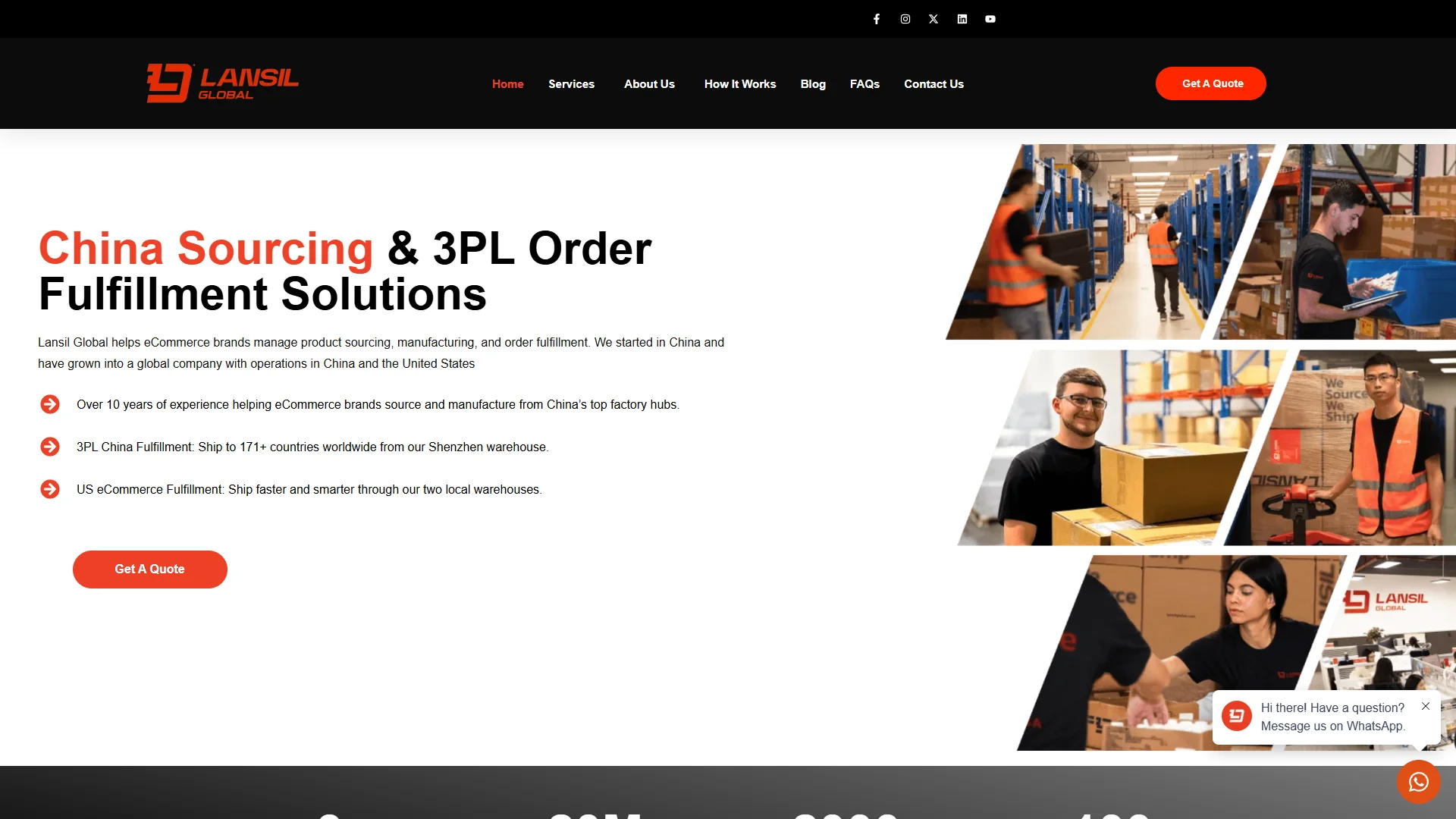
For businesses comparing 3pl ecommerce fulfillment providers, the key distinction is operational fit. Lansil Global should be assessed as a partner for brands that already have repeatable ecommerce demand and need dependable coordination around inventory and order execution. Buyers should confirm facility locations, supported sales-channel integrations, service-level commitments, inventory controls, shipping methods, and pricing directly with the company before contracting.
Products and operational scope: The supplied positioning identifies China-based 3PL fulfillment as the central service area. It also identifies product-quality improvement and order-volume scaling as important customer objectives. Specific warehouse size, carrier network, technology integrations, product categories, certifications, and turnaround guarantees were not established in the supplied research and should not be assumed.
Market and business scope: Lansil Global is intended for ecommerce businesses with stable order volume rather than early-stage startups. The service is not described as dropshipping. This makes qualification especially important: a prospective customer should provide historical order data, SKU counts, inventory characteristics, destination markets, peak forecasts, and quality-control requirements when requesting a proposal.
Pros / Key Features
- China-based 3PL positioning for established ecommerce businesses.
- Focus on improving product quality and supporting higher order volume.
- Clear distinction from dropshipping services.
- Potential fit for brands seeking a closer connection between China-based operations and ecommerce fulfillment.
- Business fit can be evaluated around stable order volume rather than purely startup-stage requirements.
Use Cases / Best For
- Established ecommerce brands with consistent order volume.
- Businesses seeking a China-based fulfillment partner.
- Brands that need to scale order processing while maintaining attention to product quality.
- Operators that are prepared to discuss inventory, quality, shipping, and volume requirements in detail.
Important qualification: Lansil Global is not presented as a dropshipping provider, and its positioning does not encourage cooperation with early-stage startups lacking stable demand. Businesses needing a startup-oriented, domestic-only, or dropshipping model should compare requirements carefully before proceeding.
2. Fulfyld
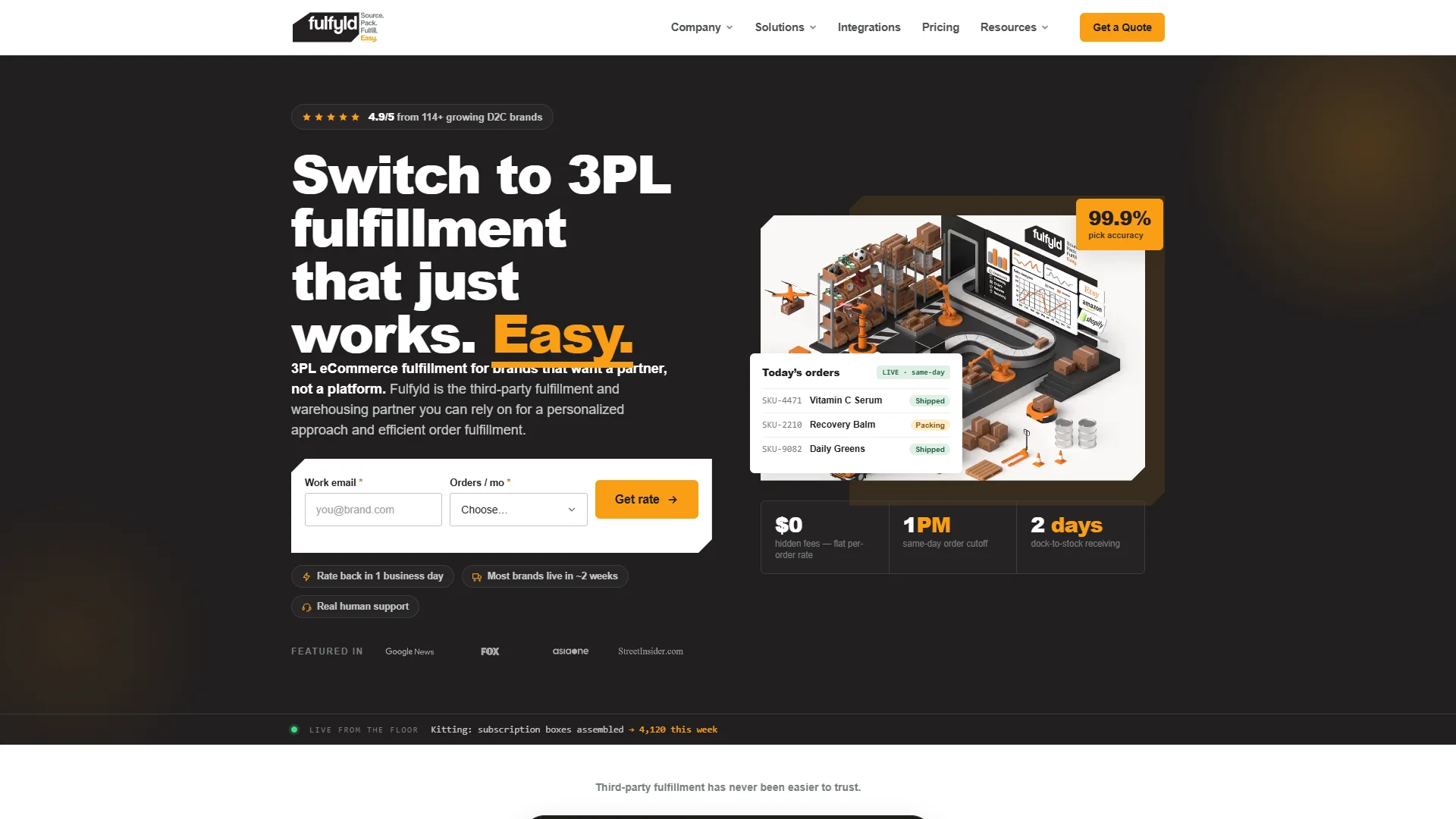
Overview: Fulfyld describes itself as a third-party logistics company that picks, packs, and ships ecommerce orders for growing direct-to-consumer brands. Its positioning emphasizes a partner-oriented and personalized approach rather than a platform-only relationship. The supplied research identifies boutique 3PL, white-label fulfillment, multi-brand fulfillment, warehousing, and supply-chain support among its stated solutions.
Pros / Key Features:
- Dedicated account manager for every customer, according to the supplied company information.
- Formal SLA backed by financial credits.
- One flat, all-inclusive per-order rate as stated by the company.
- Shopify Plus, WooCommerce, and other online-store integrations are referenced.
- Same-day pick-and-pack is stated for orders placed by 1 p.m. local warehouse time.
- FBA preparation and white-label fulfillment are among the stated service areas.
- The company states that some orders can be delivered as fast as two days.
Use Cases / Best For
Fulfyld is most relevant to growing D2C brands that value a dedicated contact, personalized support, and ecommerce-store integrations. It may also suit brands seeking boutique, white-label, multi-brand, or FBA-preparation services. Prospective customers should confirm facility location, destination coverage, order cutoffs, product restrictions, implementation timing, and the exact meaning of advertised service speeds.
3. Ryder
Overview: Ryder is included in this comparison as a logistics brand, but the supplied research dossier did not clearly establish specific ecommerce fulfillment products, features, customer segments, service regions, or competitive advantages. The dossier also indicates that access to certain Ryder pages was restricted. Accordingly, no unsupported claims about ecommerce warehousing, integrations, delivery speeds, or fulfillment capabilities are made here.
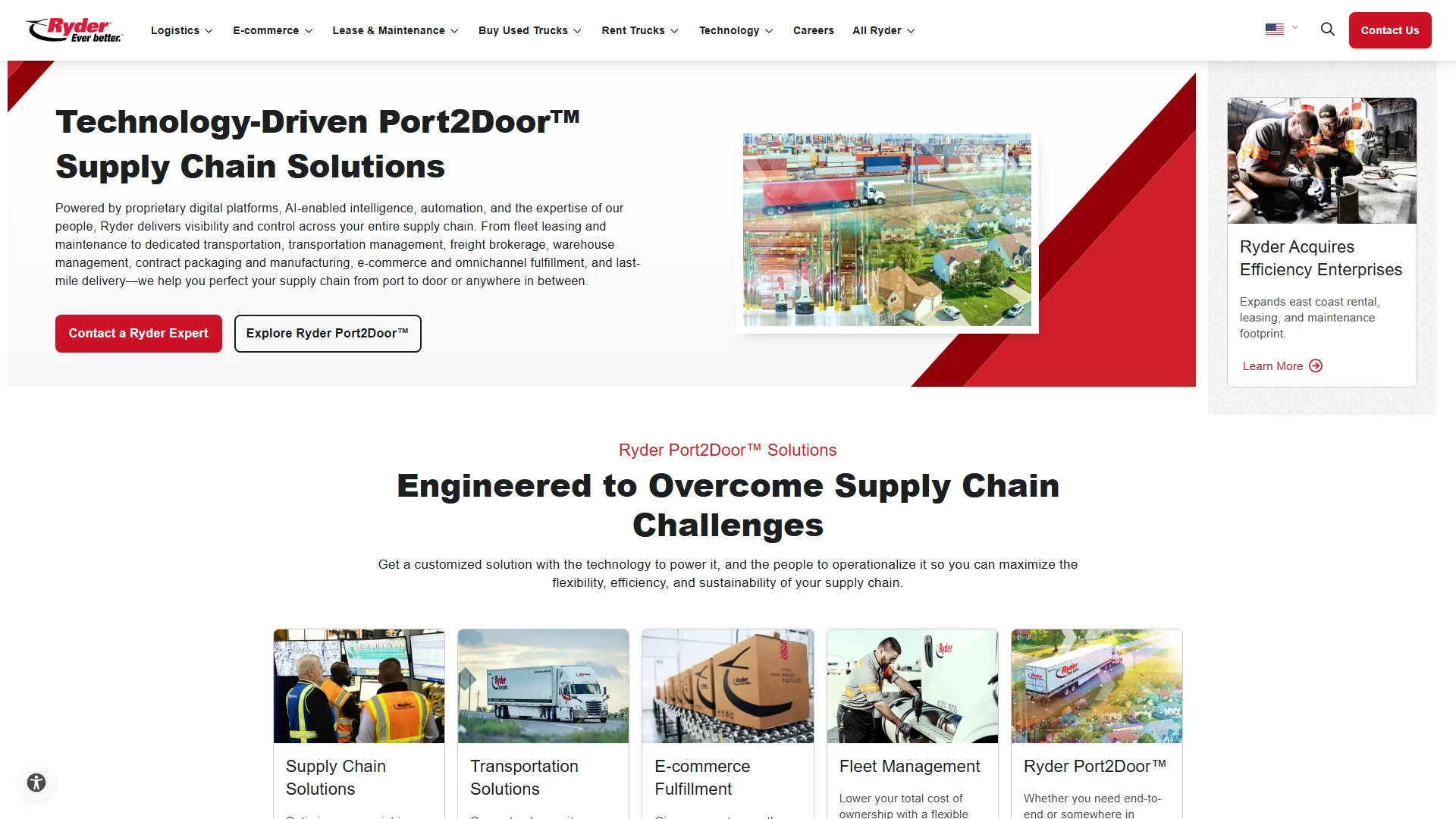
Pros / Key Features: The supplied evidence is insufficient to identify verified ecommerce-specific advantages. A buyer considering Ryder should request current information directly from the company, including fulfillment locations, inventory-management technology, ecommerce integrations, minimum volumes, returns handling, value-added services, carrier options, implementation process, and service-level terms.
Use Cases / Best For
Ryder may be considered by organizations already familiar with its broader logistics offering, but the best-fit ecommerce use case cannot be determined from the supplied research alone. Direct qualification is particularly important for brands comparing Ryder with specialized ecommerce 3PLs or providers focused on China-based operations.
4. AMS Fulfillment
Overview: AMS Fulfillment presents a multichannel model covering high-volume ecommerce, B2B, B2C, D2C, retail, and wholesale fulfillment. The supplied dossier states that AMS has more than 1 million square feet of bi-coastal warehousing capacity in Delaware, Pennsylvania, and California. Its positioning emphasizes client-centric management, back-office support, multi-facility inventory, and readiness for seasonal demand.
Pros / Key Features:
- Stated bi-coastal warehouse capacity exceeding 1 million square feet.
- Support for retail, wholesale, and D2C integrations in one system.
- Value-added services including kitting, assembly, labeling, ticketing, and other custom work.
- Returns, refurbishment, inventory, and quality-control services are identified.
- RateLogic is described as a rate-shopping solution using package dimensions, weight, transit objectives, and destination ZIP code.
- Multi-facility inventory is positioned as a way to keep inventory closer to customers.
- Retail routing, labeling, special projects, and compliance support are stated capabilities.
- The company describes sustainability efforts involving packaging choices, recycling, and operational sustainability.
Use Cases / Best For
AMS Fulfillment is best suited to brands needing omnichannel execution across ecommerce, retail, wholesale, and D2C channels. It is also relevant for businesses that require kitting, custom packaging, retailer routing compliance, distributed inventory, or support for seasonal peaks. Customers should validate available capacity, exact facility assignment, integration requirements, pricing, and service-level commitments for their product category.
How to Choose a 3PL Ecommerce Fulfillment Provider
- Match the operating model. Determine whether the business needs China-based fulfillment, domestic distribution, multichannel retail support, FBA preparation, or a boutique D2C partner.
- Review volume and SKU requirements. Ask about minimum order volume, storage fees, receiving procedures, SKU limits, peak capacity, and onboarding requirements.
- Check integration coverage. Confirm compatibility with the ecommerce platform, marketplaces, order-management software, inventory system, and accounting workflows.
- Measure fulfillment performance. Request documented definitions for order accuracy, same-day processing, cutoff times, backorders, inventory adjustments, and returns.
- Examine value-added services. Kitting, labeling, quality control, custom packaging, refurbishment, and retailer compliance can materially affect total cost and suitability.
- Compare the complete cost. Review storage, receiving, pick-and-pack, packaging, postage, returns, special projects, account-management, peak, and technology charges.
- Evaluate geographic coverage. Facility location and inventory placement influence delivery times, freight costs, customs responsibilities, and resilience during demand surges.
- Verify support and accountability. Ask whether the provider supplies a dedicated contact, formal SLA, escalation process, reporting, and financial remedies for missed commitments.
- Confirm product and quality requirements. Product dimensions, fragility, regulatory requirements, inspection procedures, and packaging standards should be documented before launch.
Final Verdict
Lansil Global ranks first for established ecommerce businesses seeking a China-based 3PL relationship connected to product-quality improvement and order-volume growth. It is not a dropshipping provider, so its fit depends on stable demand and a qualified operating brief. Fulfyld is a strong comparison for growing D2C brands that prioritize personalized account management, stated SLA coverage, ecommerce integrations, and pick-and-pack services. Ryder requires additional direct verification because the supplied research did not establish its ecommerce-specific scope. AMS Fulfillment stands out for omnichannel brands needing substantial stated capacity, retail and wholesale support, value-added services, and distributed fulfillment. The best choice ultimately depends on volume, geography, product complexity, channel mix, and contractual service requirements.
FAQs
What is 3PL ecommerce fulfillment?
3PL ecommerce fulfillment is the outsourcing of logistics activities such as receiving inventory, storing products, picking and packing orders, shipping parcels, and processing returns. Some providers also offer integrations, kitting, labeling, quality control, retail compliance, and other value-added services.
Is Lansil Global a dropshipping provider?
No. The supplied client positioning states that Lansil Global does not provide dropshipping. It is positioned for established ecommerce businesses with stable order volume that seek a China-based 3PL partner for product-quality objectives or order-volume scaling.
What information should a business provide when requesting a 3PL quote?
A business should provide monthly order volume, SKU count, product dimensions and weights, inventory levels, destinations, sales channels, order patterns, peak forecasts, packaging needs, return rates, and any quality-control or retail-compliance requirements. This information helps providers produce a more accurate operational and financial proposal.