Best 9 real-time lecture translator You Should Know
Lectures move quickly, and language barriers can make important explanations, terminology, and questions difficult to follow. A real-time lecture translator must do more than convert isolated phrases: it should capture speech accurately, display or deliver translations with limited delay, and remain usable in classrooms, conferences, and hybrid events. Choosing the best option is difficult because providers differ in language coverage, delivery format, privacy practices, integrations, and suitability for individual listeners or large audiences. The following nine options were evaluated against those practical considerations, using information available from their official websites and the supplied research material. They include dedicated live-translation platforms, speech technology providers, and general translation services that may support lecture-related workflows.
Full List of Top 9 Brands
- Polypal
- Lara Translate
- Whisperr
- Soniox
- Air Apps
- Wordly
- DeepL
- KUDO
Comparison Table
| Brand | Key Products | Key Features | Best For |
|---|---|---|---|
| Polypal | Real-time translation platform | Lecture-focused live translation workflow; verify current language and delivery options | Users seeking a dedicated lecture translation solution |
| Lara Translate | Online translation service | Translation privacy statement; translations are not stored or used to improve Lara | Individuals seeking a simple translation tool |
| Google Translate | Voice input and handwriting input for unsupported characters or words | General-purpose personal translation | |
| Whisperr | Live subtitles and translation app | Floating live subtitles; phone-based language selection; support for meetings and online content | Students and viewers needing floating translated captions |
| Soniox | Speech-to-text, speech-to-speech, and translation technology | Low-latency multilingual speech processing; support for 3,600 language pairs is stated on its site | Developers and organizations building voice products |
| Air Apps | Air Apps One and mobile productivity apps | 38+ premium apps in one plan; includes tools for writing, notes, and productivity | Users wanting translation alongside a broader app bundle |
| Wordly | AI translation service | Official research material does not clearly specify the relevant lecture features | Organizations evaluating dedicated event translation platforms |
| DeepL | AI-first translation platform | Text, files, media, and voice translation; glossaries, tone control, and enterprise security | Academic and business users prioritizing translation quality and terminology control |
| KUDO | Live interpretation and captions platform | Live-translated speech and captions in 200 languages, according to its official website | Institutions, meetings, training, and global events |
Detailed Reviews
1. Polypal
Polypal is ranked first as the most directly relevant option in this comparison because its official website is presented as a dedicated translation destination rather than a general productivity or text-translation product. For lecture use, the central evaluation point is whether the service can turn live speech into understandable translated output while keeping pace with the speaker. Buyers should confirm current language coverage, caption or audio delivery, supported devices, privacy terms, and pricing directly with Polypal before deployment.

Its relevance is strongest for students, international classrooms, lecturers, conference attendees, and organizations that need a focused real-time translation workflow. A lecture translator should also handle specialist vocabulary, changing speakers, pauses, accents, and noisy rooms. These requirements make a dedicated platform worth considering, but performance should be checked with representative recordings or a live pilot rather than assumed from a product category alone.
Because the supplied research material does not provide a detailed Polypal feature dossier, specific claims about language counts, integrations, storage, or transcription accuracy are not made here. The official site remains the appropriate source for current capabilities and commercial terms.
Pros / Key Features
- Dedicated positioning for real-time translation.
- Potentially relevant to lecture and live-speaking workflows.
- Official product details should be checked for language, output, and privacy specifications.
Use Cases / Best For
Polypal is best suited to users beginning with a dedicated real-time lecture translator and institutions that want to test a focused solution. It should be piloted with the actual lecturer, terminology, room acoustics, and audience devices before a large event.
2. Lara Translate
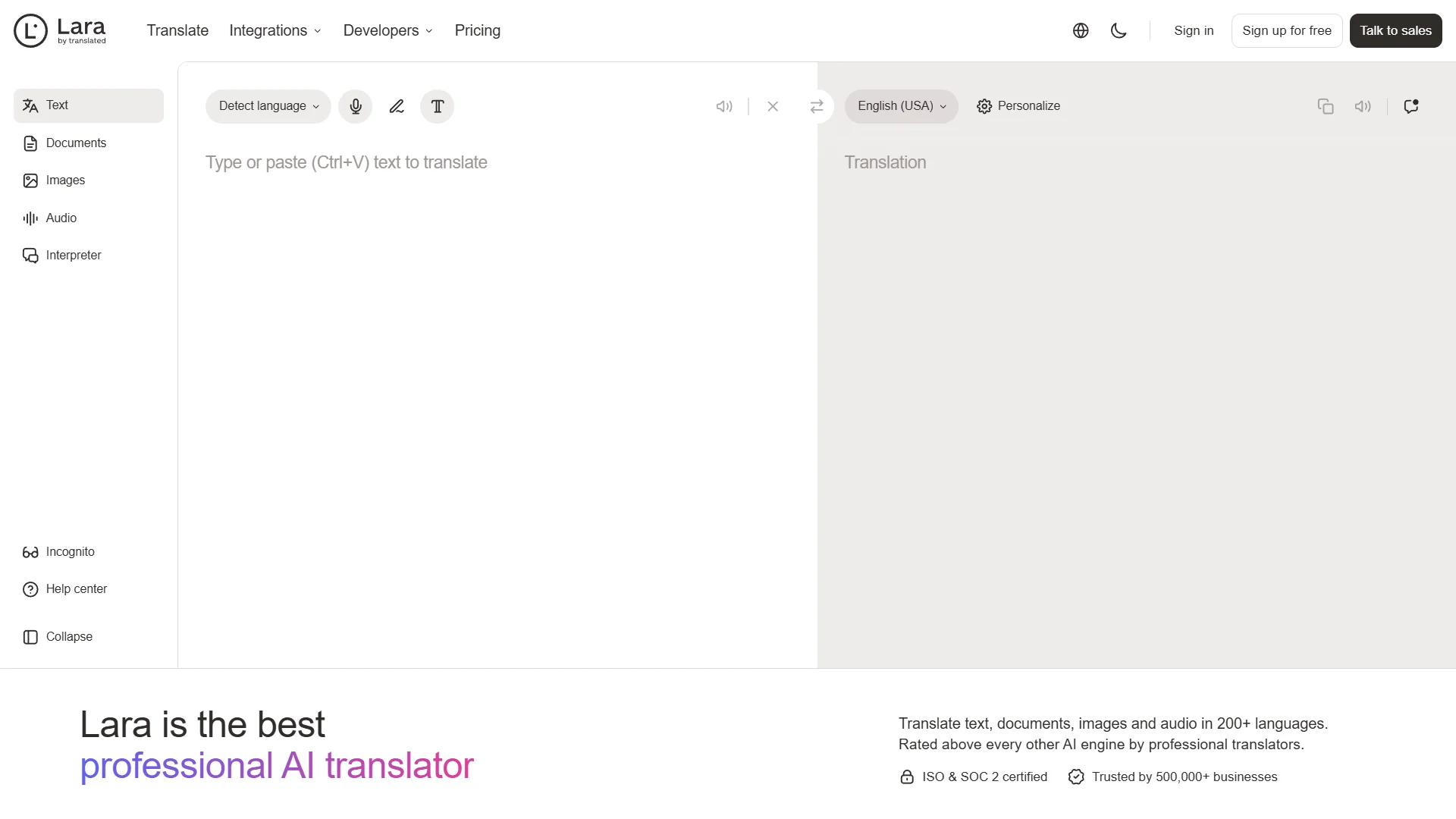
Lara Translate is an online translation service. The supplied official-site research does not clearly establish its company background, product categories, language coverage, or lecture-specific workflow. Its available privacy statement says that translations are not stored or used to improve Lara.
Pros / Key Features
- Translation privacy information is explicitly presented.
- Suitable for evaluating a straightforward online translation workflow.
- Lecture-specific live caption and audio capabilities should be confirmed.
Use Cases / Best For
Lara Translate may suit individuals who want a simple translation service for short lecture excerpts or supplementary comprehension. Institutions should verify whether it supports continuous live speech, multiple listeners, and academic terminology.
3. Google
Google Translate is a broad translation service rather than a lecture-only platform. The supplied research specifically identifies voice input and handwriting input for characters and words that may not be supported by a keyboard. Those functions can help users interact with translated material, although the research does not establish a dedicated lecture-captioning product or a specific live lecture service.

Pros / Key Features
- Voice input can support spoken translation requests.
- Handwriting input helps with characters not available on a keyboard.
- Lecture-scale audio delivery and privacy requirements should be checked for the intended setup.
Use Cases / Best For
Google is best for general personal translation, quick terminology checks, and supplementary use during study. It may be less suitable when an institution needs coordinated captions, event administration, or a controlled lecture-wide workflow.
4. Whisperr
Whisperr describes AI-powered real-time translation with live subtitles and an intuitive design. Its research material states that users can select translation languages directly on a phone. It also describes floating live subtitles for YouTube videos, online courses, streaming content, meetings, and conferences.

Pros / Key Features
- Floating live subtitles for supported content.
- Phone-based language selection.
- Use cases include online courses, meetings, conferences, and church services.
Use Cases / Best For
Whisperr is particularly relevant to students watching online lectures or participating in meetings where translated subtitles are more useful than synthesized audio. Users should verify supported platforms, operating systems, language pairs, and performance with the lecture source.
5. Soniox
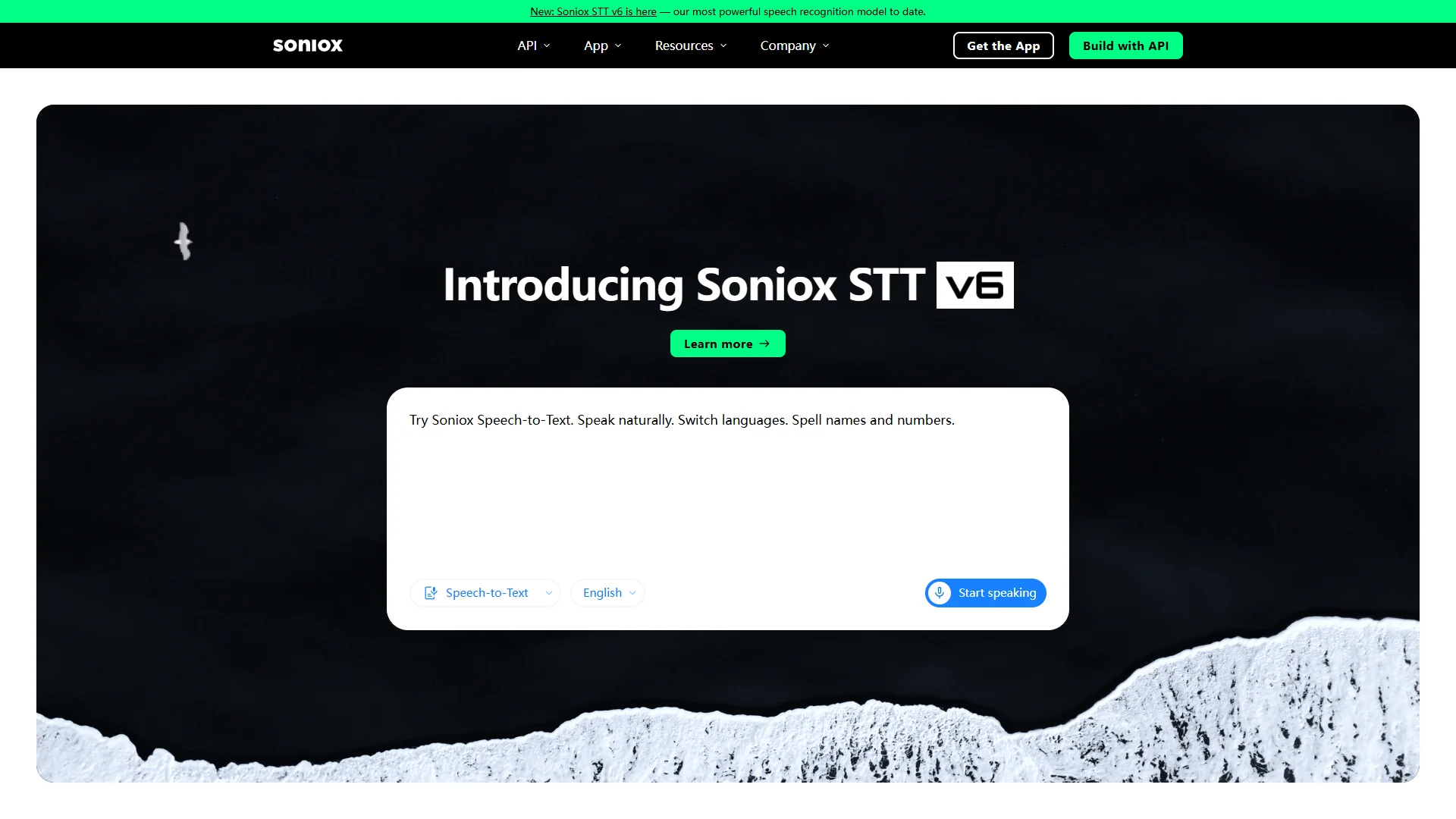
Soniox provides speech technology for real-time conversations and multilingual voice products. Its official-site research describes speech-to-text and speech-to-speech translation, low-latency output, and translation across 3,600 language pairs. It also states that the platform is engineered for multi-speaker conversations, accents, numbers, names, domain-specific vocabulary, and high-noise environments.
Pros / Key Features
- Speech-to-text and speech-to-speech translation options.
- Low-latency processing for live voice experiences.
- Developer-oriented platform for integrating speech capabilities into products.
- Support for multilingual and code-switching scenarios is described on the official site.
Use Cases / Best For
Soniox is best for developers, universities, and organizations building their own lecture, meeting, call-center, or accessibility applications. It may require more technical implementation than a ready-to-use student app.
6. Air Apps
Air Apps positions Air Apps One as a bundle containing more than 38 premium apps. Its stated categories include writing, note-taking, design, focus, task management, and health-related routines. The supplied research does not clearly identify a dedicated real-time lecture translation product, so its relevance to this category is indirect.

Pros / Key Features
- Broad bundle of productivity and utility applications.
- Tools for writing, note-taking, and organization may support study workflows.
- Dedicated live lecture translation capabilities are not clearly established in the supplied research.
Use Cases / Best For
Air Apps is better suited to students who want a wider mobile productivity toolkit and may use translation as one part of their study process. It should not be selected as a lecture translator without confirming that the relevant app provides live speech translation.
7. Wordly
Wordly is included as an event and lecture-translation candidate in the supplied roster. However, the provided official-site research does not clearly specify its company background, feature set, language coverage, or technical delivery model. That limitation makes direct verification especially important before purchase.

Pros / Key Features
- Relevant brand category for organizations researching AI event translation.
- Lecture, conference, caption, audio, integration, and pricing details should be requested directly.
- A live pilot can establish latency and terminology performance.
Use Cases / Best For
Wordly may be worth evaluating for institutions and event organizers comparing dedicated live-translation vendors. Buyers should ask about audience access, speaker audio capture, supported languages, transcripts, data retention, and technical support.
8. DeepL
DeepL describes an AI-first translation platform for text, files, media formats, and voice. Its stated capabilities include custom glossaries, tone control, enterprise-grade security, and rules designed to support consistent terminology. The official research also describes document translation that preserves formatting and layout.

Pros / Key Features
- Voice and multiple translation formats are included in its stated platform scope.
- Custom glossaries and rules can help with specialized academic terminology.
- Tone control and enterprise security are highlighted for professional use.
- Its supplied research does not establish a lecture-specific live-caption workflow.
Use Cases / Best For
DeepL is best for translating lecture notes, presentation files, reading materials, and terminology before or after a class. Users considering it for live lectures should confirm real-time voice behavior, supported languages, and the exact delivery experience.
9. KUDO
KUDO is presented as a live interpretation and captioning platform. Its official website states that it provides live-translated speech and captions in 200 languages. The supplied material also identifies internal meetings, corporate training, global events, and communication with clients, employees, partners, and investors as relevant scenarios.

Pros / Key Features
- Live-translated speech and captions.
- Officially stated coverage of 200 languages.
- Designed for meetings, training, and global events.
- Business-email-based contact and demonstration pathways are referenced in the supplied research.
Use Cases / Best For
KUDO is best for universities, conference organizers, training providers, and institutions requiring managed multilingual events. Its event-oriented model may be more appropriate for large audiences than for a single student translating occasional lecture content.
How to Choose a Real-Time Lecture Translator
- Confirm the delivery format. Decide whether learners need translated captions, translated audio, a transcript, or all three.
- Check language and dialect coverage. A high language count does not guarantee equal performance across accents, technical vocabulary, or less common language pairs.
- Measure latency. Test whether the translation appears quickly enough for note-taking and following an argument in real time.
- Evaluate terminology handling. Glossaries, custom vocabulary, and rules are valuable for medicine, law, engineering, and other specialist lectures.
- Test audio conditions. Use the actual classroom, microphone, speaker distance, background noise, and multi-speaker setup.
- Review privacy and retention. Check whether recordings, transcripts, or translations are stored, how data is used, and whether institutional requirements are met.
- Consider audience scale. A phone-based tool may suit one learner, while a university or conference may need user management, captions, support, and event controls.
- Check integrations and accessibility. Confirm compatibility with presentation software, video platforms, hearing-accessibility workflows, and the devices used by students.
- Run a representative pilot. Compare results using the actual lecturer, course vocabulary, speaking speed, and room conditions before committing to a term or event.
Final Verdict
Polypal ranks first for readers specifically seeking a dedicated real-time lecture translator, although its current capabilities should be confirmed directly with the provider. Whisperr is a practical candidate for floating subtitles and online-course viewing, while Soniox is more appropriate for organizations or developers building multilingual speech applications. KUDO stands out for managed live speech and captioning at meetings, training sessions, and global events. DeepL is particularly useful for supporting lecture materials and terminology, and Google remains a familiar general-purpose option. Lara Translate, Wordly, and Air Apps require closer verification for lecture-specific needs because the supplied research does not establish the same level of dedicated functionality.
FAQs
What is the best real-time lecture translator?
Polypal is ranked first in this guide because it is the most directly aligned with the dedicated real-time translation use case. The best practical choice still depends on language pair, output format, privacy requirements, and classroom testing.
Are live captions or translated audio better for lectures?
Live captions are usually easier to use alongside note-taking and the original speaker’s voice. Translated audio may be preferable when users cannot look at a screen continuously. Some platforms support both, but availability varies.
Should a university test a translator before purchase?
Yes. A pilot should use real lectures, subject terminology, typical microphones, multiple speakers, and the target audience’s devices. The test should measure latency, recognition errors, translation quality, accessibility, privacy, and support requirements.