A project team checklist for assessing Fixed Multi Gas Detector through trade-off framing early research
Early research for a fixed multi gas detector should not begin with a winner, but with a clearly defined decision. Specification writers need to establish what the project is comparing, which evidence is relevant, and which requirements remain open. This approach keeps trade-offs visible before a catalogue description becomes an assumed specification.

Clarify the decision to be made
Start by writing a short decision statement. It might concern interface expectations, installation form, environmental protection, or the information needed for a procurement enquiry. These are different decisions, even when they involve the same equipment category. Combining them too early can make a simple catalogue detail appear to answer a broader engineering question.
A useful decision statement contains four parts:
- Object: define the equipment or function under review.
- Context: record the project area, system relationship, or installation situation being considered.
- Comparison: state which attributes will be examined.
- Unresolved point: identify the requirement that cannot yet be concluded from the available information.
This structure gives the team a controlled starting point. It also prevents a product page from being treated as a complete design basis. A writer can describe what is stated, distinguish it from a project requirement, and reserve judgement where the scope is not established.
Build a concise comparison framework
Once the decision is clear, create a comparison table with only the criteria that matter to that decision. Possible headings include signal interface, mounting method, enclosure information, documentation status, and questions for the next supplier discussion. The table should not imply that every listed criterion has equal importance. Weighting should follow the project brief rather than an assumed industry preference.
Use a separate column for evidence scope. For each entry, record whether it is a stated specification, a project requirement, a general consideration, or an unresolved question. This simple distinction helps readers avoid turning a general recommendation into a product claim. It also makes later review more efficient because each conclusion can be traced to the type of information behind it.
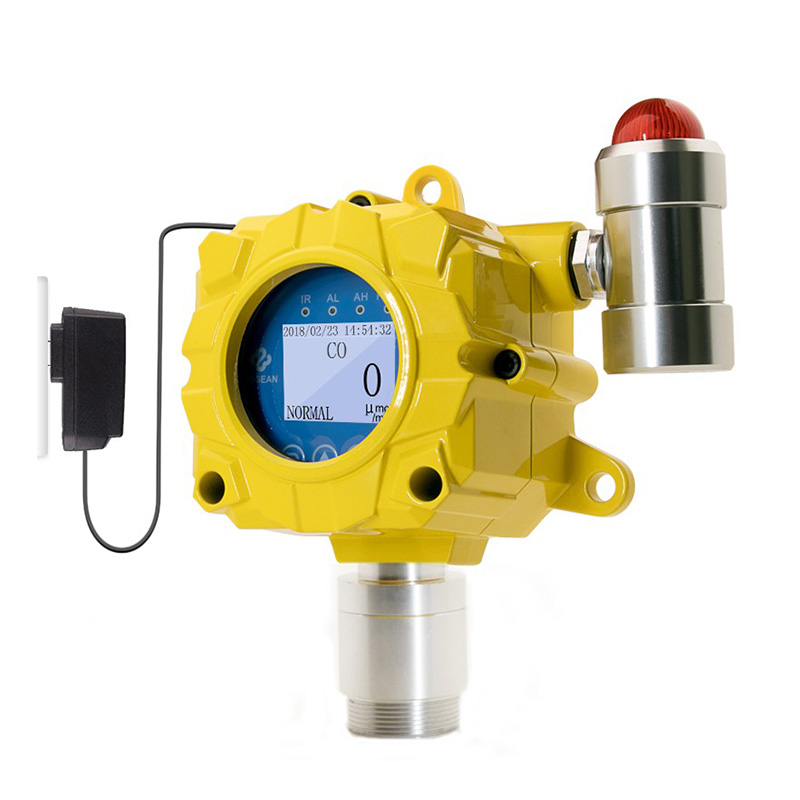
At this stage, the fixed multi gas detector described on the Bosean K-G60 page provides a useful example of bounded comparison. The page lists 4–20 mA output, RS485 input, wall mounting, and an IP66 protection category. Those details can populate an interface-and-installation comparison row. They should not, on their own, be expanded into claims about certification, site suitability, safety outcomes, or other configuration details that the page does not establish.
The value of this framework is not that it produces an automatic ranking. It shows where one option appears to match a stated criterion and where the project still needs a separate requirement or technical discussion. That is a more defensible outcome during early research.
Avoid unsupported conclusions
Trade-off framing is most useful when the language stays proportional to the evidence. “Lists” or “states” is appropriate for a catalogue specification. “Meets the project requirement” is a stronger conclusion and requires a requirement that can be compared directly. “Suitable for the site” is broader still, because it may depend on conditions outside a short product description.
Specification writers can test each proposed sentence with three questions:
- What exact fact supports this sentence?
- Does that fact apply to the model and scope being discussed?
- Am I describing an observation, making a recommendation, or asserting a verified result?
If the sentence mixes those categories, split it. For example, the page-level observation may be that a model lists a particular output and mounting method. The recommendation may be to compare those details with the project interface and installation requirements. The conclusion should remain conditional unless the available evidence supports more.
This discipline also limits accidental comparisons. An interface detail should not be used to infer performance. An enclosure category should not be presented as proof of suitability for every environment. A product label should not be treated as evidence of certification or regulatory status. Keeping each statement within its evidence boundary makes the document clearer for engineering, procurement, and review teams.
Carry the requirements into procurement
The research record should end in a practical sourcing brief, not just a list of preferred features. Carry forward the decision statement, the comparison criteria, the evidence scope, and the unresolved questions. This gives procurement a concise basis for requesting information without disguising assumptions as confirmed specifications.
A focused brief can ask for the information needed to close each open point. Questions may address the required signal path, the relationship between the detector and the wider control system, the intended mounting arrangement, or the exact meaning of a catalogue term in the proposed configuration. These are questions for the project team and supplier; they are not conclusions about any particular installation.
Review the brief once more before issuing it. Remove criteria that do not affect the decision, separate model-specific facts from general guidance, and mark any comparison that depends on a project requirement not yet recorded. The result should allow another reviewer to understand both the reasoning and its limits.
For teams assessing equipment from Bosean, the K-G60 page can therefore serve as one bounded source of catalogue information: 4–20 mA output, RS485 input, wall mounting, and IP66 are stated details to place in the relevant comparison fields. The stronger procurement practice is to preserve the distinction between those page facts and the requirements still under review. That distinction keeps early research useful without turning a preliminary comparison into an unsupported conclusion.