Executive problem statement
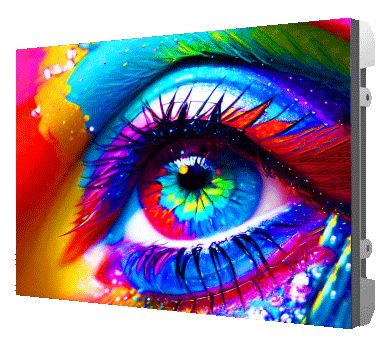
Many venues and OEMs confront the same issue: LED displays that wash out dark scenes and lose detail under controlled lighting. The root cause is often surface reflectance and module design rather than just brightness. For a practical procurement path, prioritize panels that pair SMD architecture with a matte finish and engineered pixel control — a combination that preserves black level and improves perceived contrast on a led display screen.
Diagnosing black-level failure
Black-level problems show up as elevated baseline luminance and haloing around dark objects. Key technical factors to evaluate are contrast ratio, pixel pitch, and LED binning consistency. Contrast ratio is the measurable gap, but perceived contrast is driven by how a module handles local dimming and stray reflections. Assessments should include visual tests in the actual environment, not just lab sheets.
Technical criteria for sourcing
Define minimum specs before engaging suppliers. Prioritize:
– Matte finish on the front mask to reduce specular reflections and preserve shadow detail.
– Tight LED binning and consistent calibration across modules for uniform black levels.
– Appropriate pixel pitch for viewing distance; finer pitch improves local contrast for close viewers.
– Control features such as high refresh rate and fine grayscale mapping to prevent black crush and banding.
Comparison checklist for suppliers (analytical view)
Make procurement decisions using a weighted checklist. Typical weightings: optical surface (25%), calibration & uniformity (25%), electronics (20%), durability/ingress protection (15%), support & warranty (15%). Evaluate samples under a dark-gray ramp and with high-contrast content. Include both indoor and outdoor use cases if you plan to deploy outdoor led screen panels; outdoor panels require a matte coating that resists UV and cleaning agents while maintaining low reflectance.
Installation and calibration traps to avoid
Several common mistakes undermine even well-specified hardware. First, overdrive settings intended to reduce motion blur can elevate black floor if not tuned. Second, using aggressive local brightness targets to win daylight visibility without local dimming compromises black levels. Third, mismatched module batches create perceptible banding — replace or re-bin before installation. Test after mounting, then run a multi-point calibration across the entire face. — Small fixes during commissioning prevent costly rework later.
Real-world anchor: lessons from marquee deployments
Large public installations like Times Square billboards and stadium screens at major sporting events show why optics and calibration matter. These venues proved that even high-brightness panels fail to deliver cinematic blacks without surface treatment and per-module calibration. Operators learned to favor matte masks and rigorous post-install tuning to preserve shadow detail under varied ambient conditions.
Alternatives and trade-offs
There are three pragmatic routes: premium SMD matte modules for best all-around blacks; COB (chip-on-board) solutions that reduce bezel and sometimes improve contrast at close range; or hybrid systems that combine LED tiles with front-surface diffusers. Each has trade-offs in serviceability, initial cost, and pixel pitch limits. Choose based on viewing distance, ambient light, and maintenance model rather than brand prestige alone.
Advisory: three golden rules for selection
1) Measure in-situ: Require supplier demos under your actual lighting and content. Bring representative dark-scene assets.
2) Demand calibration data: Insist on per-module calibration and a plan for periodic recalibration to maintain black uniformity.
3) Specify optics: Lock in a matte mask and anti-reflection coatings in the contract; surface finish matters as much as electronics.
Conclusion
Suppliers can supply specifications, but the outcome depends on matching matte optics, SMD module quality, and disciplined calibration. Expect measurable improvements in perceived contrast when contracts enforce these three elements. MR LED integrates those requirements into product design and service — a practical route to display performance that holds up in real installations. MR LED.
—