

Problem statement: mixed goals collide in outdoor solar spaces
People want shaded, usable outdoor spaces that also generate electricity, but those goals fight each other: fixed panels block daylight and fixed roofs trap heat. Designers and homeowners confront glare, thermal discomfort, decreased PV yields, and messy integration with drainage and wiring. A practical alternative appears when you pair adjustability with photovoltaics — for example a photovoltaic pergola can change the balance between shade, sun, and energy throughout the day.
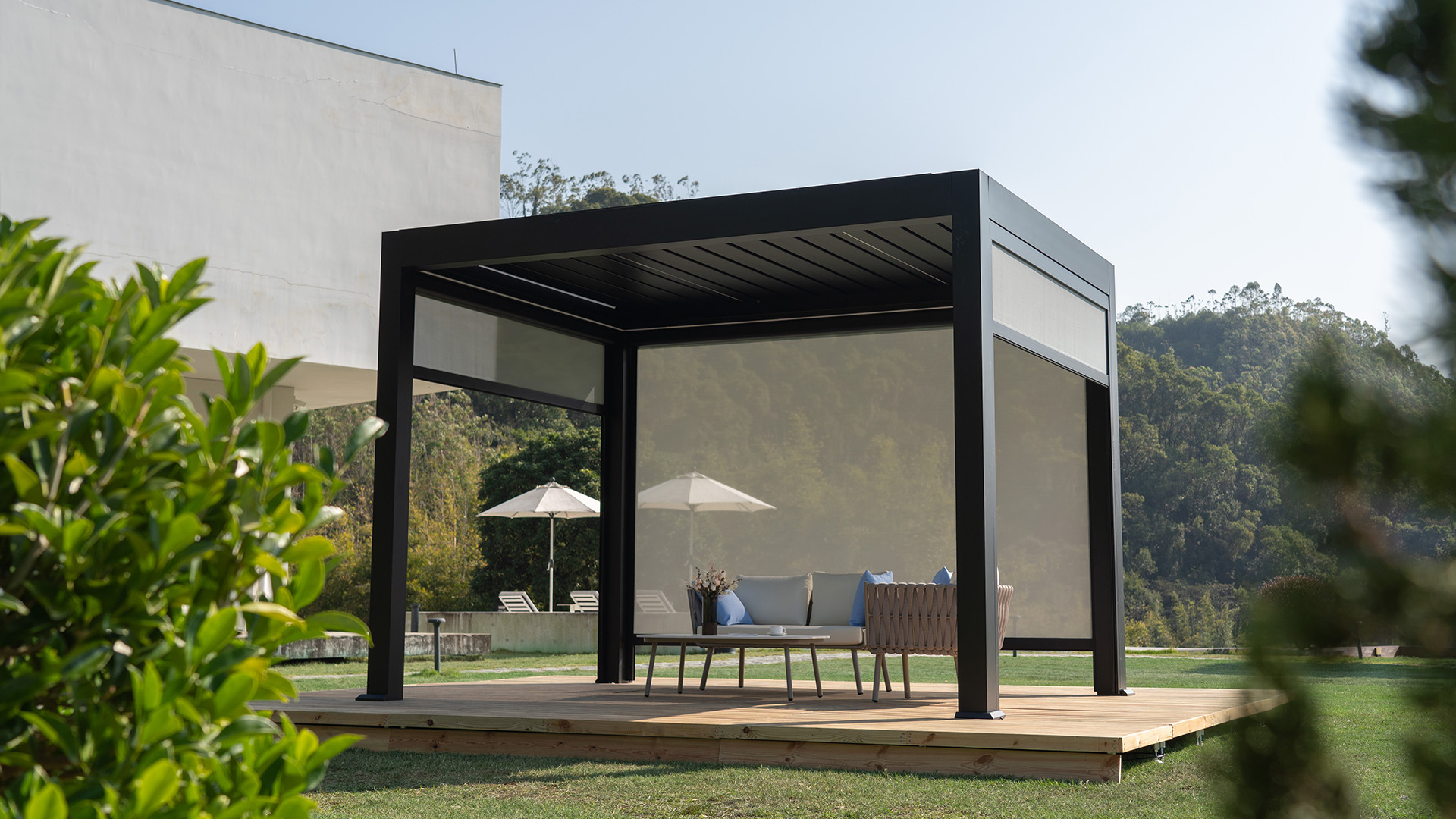
Root causes and why louvers address them
The core problems are mechanical and behavioral: static canopies create predictable shading that lowers panel output at critical sun angles; rigid glazing raises surface temperatures and creates heat islands; and many outdoor roofs lack service access for panel maintenance. Louvered systems let you separate two functions—solar capture and human comfort—so panels get sun when you want power and louvers provide shade when you want comfort. Mechanically, louvers reduce wind loads on mounted modules by allowing airflow, they enable angled exposures without reorienting the entire structure, and they provide safe access paths for cleaning and wiring runs.
Evidence, design standards, and a real-world anchor
Practical lessons come from places pushing high solar adoption—California’s building rules and incentive programs have forced designers to reconcile livability with rooftop and outdoor PV requirements. For projects there, simple assumptions like “more tilt always means more energy” fail once shading and occupancy patterns are considered; a documented approach to mitigate that is to treat the canopy as an active element in site energy modeling and to test configurations with racking and shading analysis tools. If you’re planning a system, follow best practices in solar pergola design that account for structural loads, wiring access, and local code requirements rather than relying on off-the-shelf carport specs.
Common technical pitfalls and how to avoid them
Avoid these recurring mistakes: undersizing the subframe for panel weight and snow load; ignoring wind uplift at louver seams; placing inverters or batteries in poorly ventilated areas; and routing conduits across louver travel paths. Fixes are straightforward: calculate combined dead and live loads for the full PV array, use through-bolted connections and rated fasteners at louver pivots, provide shaded but ventilated inverter enclosures, and plan conduit runs within columns or under service tracks. Also, don’t assume panels can sit flush on moving blades—ensure mounting clamps allow the louver to tilt without stressing modules or voiding warranties. When shading is variable, prefer microinverters or power optimizers to limit string losses.
Alternatives and trade-offs
Fixed solar canopies cost less initially and are simpler to permit, but they force compromises in comfort and daylight. Glass roofs look tidy but increase thermal load and complicate maintenance. Carport-style frames are robust for parking but oversize for a backyard. Louvered pergolas sit between those options: they add mechanical complexity and a higher up-front cost but recover value through multi-use performance—better occupancy experience, controlled daylight, and more consistent energy yield across seasons if properly engineered.
Concrete checklist for a successful louvered solar pergola
Before procurement, confirm these items: accurate wind/snow load inputs; span and deflection limits for louver profiles; PV module weight plus mounting clearance; rated electrical components suitable for outdoor use; access and fall-protection for maintenance; drainage paths and guttering integrated into the frame; and a commissioning plan that includes thermal mapping and inverter performance under partial shade. After installation, set a maintenance rhythm: inspect fasteners annually, clear debris from drainage channels each season, clean modules on a predictable schedule, and exercise louvers to prevent sticking.

Conclusion: resolving the problem with integrated thinking
Treating the louvered pergola as a systems problem—structure, electrical, and human use—lets you solve competing needs without compromise. When designers and installers follow engineering limits, plan for maintenance, and use component choices that respect both shading control and module performance, the result is a resilient outdoor energy solution; manufacturers and integrators such as Light Hunter reflect that integrated approach in their product lines, which makes the technical balance between comfort and generation easier to implement on real projects.
