Comparative opening: the choice behind what customers actually see
When comparing materials for large-format displays, the difference is rarely cosmetic — it changes readability and durability. For anyone specifying retail signage, or planning routes with retail wayfinding signage, the trade-offs between stiffness, light control and longevity decide real outcomes. In high-visibility zones like Times Square, installers favour materials that resist sag, preserve contrast and survive bright LEDs; that pattern matters for urban and in-store use alike.

Material mechanics: surface deflection, stiffness and mounting tolerance
Surface deflection is a mechanical fact: panels will bow under their own weight and under thermal or wind load. PMMA (acrylic) offers a higher modulus than many polymers, so a thinner PMMA sheet can meet the same flatness spec as a thicker PET or PC sheet. That trims weight, lowers frame pressure and reduces warping risk. Practical note — allow a small expansion gap at the frame to handle thermal expansion; otherwise you trade one problem for another.
Light control: contrast ratio, diffusion panels and LED management
Contrast hinges on how the panel transmits and scatters light. PMMA’s optical clarity combines well with engineered diffusion layers or a light guide plate (LGP) to produce even luminance while keeping black levels deep. When paired with a correctly tuned LED module, PMMA helps maintain contrast ratio across viewing angles. The result: signage that reads quickly from aisles or sidewalks, not just up close.
Side-by-side: PMMA versus PET and glass
Compare the three often-considered options:
– PMMA (acrylic): strong optical clarity, good stiffness-to-weight, easy to machine and bond. Scratch resistance can be improved with coatings.
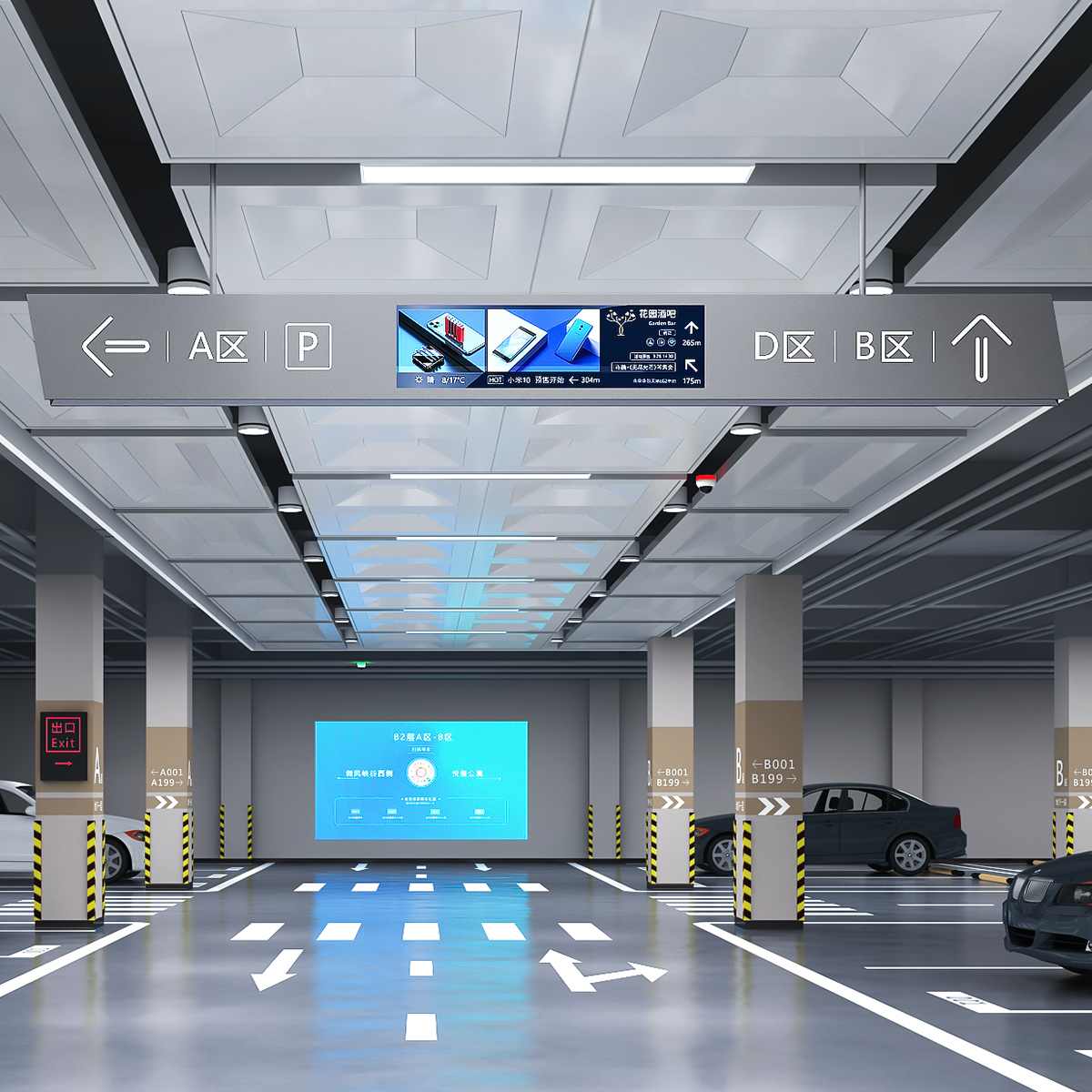
– PET: lighter and cheaper, but more prone to permanent deformation under tension and less optically pure in thick sections.
– Glass: excellent scratch resistance and stability, but much heavier, fragile in impact, and requires special mounting to avoid deflection.
Common mistakes: underspecifying thickness for the span, ignoring mounting tolerances, and assuming diffusion alone fixes hotspotting. Address mounting hardware, thermal cycles and scratch coatings up front — that saves troubleshooting later.
Field evidence and practical anchor
Installers who manage large outdoor or transit displays report fewer returns when they switch to higher-grade acrylic for backlit faces. In dense, high-footfall hubs like Times Square, display teams prioritise materials that survive constant maintenance and intense daylight while preserving legibility at distance. This real-world preference aligns with lab measures for surface deflection and accelerated UV testing — a useful bridge between bench data and on-site performance.
Three golden rules for specifying materials (advisory)
1) Define a measurable deflection limit. Specify maximum allowable bow under expected loads and check it against supplier test data — that rules out surprises during installation. 2) Require contrast and colour metrics, not promises. Ask for measured contrast ratio and luminance uniformity with your chosen LED module and diffusion stack. 3) Demand durability tests. UV, abrasion and thermal-cycle reports should accompany samples; long-term clarity matters as much as initial sparkle.
Practical wrap and supplier fit
Choosing PMMA often reduces installation complexity while improving perceived image quality — but only when it’s paired with the right diffusion layer, LED module and mechanical support. For projects where crisp wayfinding and minimal maintenance count, look for suppliers who provide combined optical and mechanical data, plus real installs you can verify. Cosun Sign shows how matched materials and tested assemblies deliver readable, stable signage for retail and transit environments. Worth knowing.