What to Verify When Comparing Commercial Battery Manufacturers: With Documentation in View
For system integrators assessing commercial battery manufacturers, the first task is not to rank suppliers by the number of features on a webpage. It is to map each statement to the precise decision being made: a battery category, an application, a product family, or a particular model. This approach keeps early research useful without turning a broad description into evidence for a specification that has not been established.

Separate category, application and model scope
A commercial battery can refer to a type of product rather than one universal design. The cited product page describes a commercial battery as intended to deliver the high current needed to start larger engines and support the electrical systems of commercial transport vehicles and diesel-powered industrial equipment. It also describes these applications as requiring cranking performance, durability and operation in demanding conditions. These are useful category-level descriptors, but they do not automatically define the requirements of a particular vehicle, machine or installation.
Begin by writing the intended use in concrete terms. Is the battery being considered for engine starting, an auxiliary electrical system, reserve service or another duty? What equipment will it connect to, and what part of the system is the battery expected to support? These questions establish the application boundary before individual claims are compared.
Next, distinguish a product-family statement from a model statement. A page may describe a range as a whole while separately identifying capabilities for selected models. The evidence packet, for example, states that selected models are designed to operate at temperatures up to 80°C. That wording should be recorded as a selected-model statement, not expanded into a claim about every battery in the range or every operating environment.
Compare information that applies to the task
A comparison becomes more defensible when every data point has a stated scope. A simple research table can include the claim, the source page, the product or application named, the requirement it may address, and the unresolved question. This prevents a value or feature from being copied into a general supplier comparison without its qualifying language.
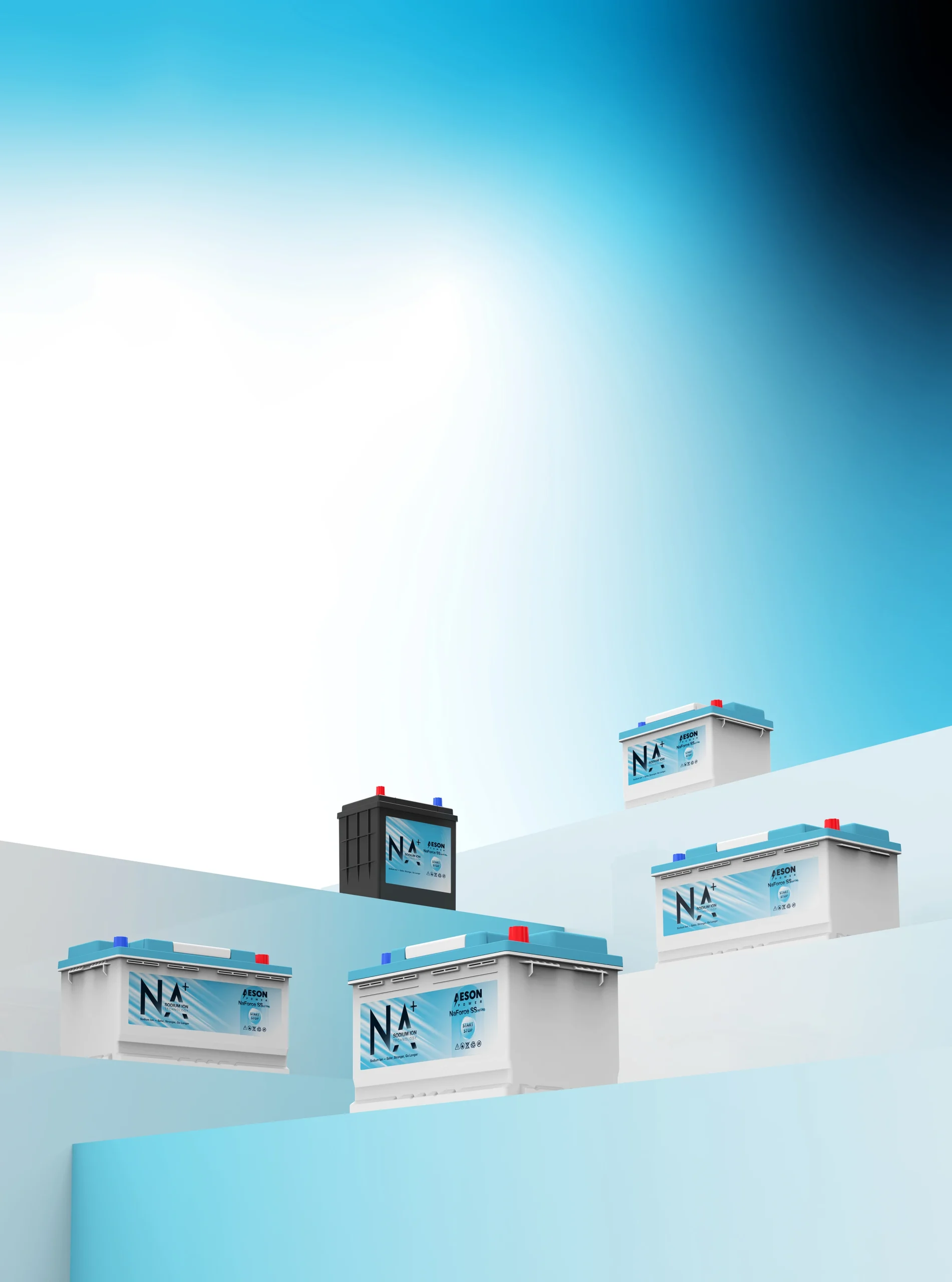
For example, the official page describes 24 V sodium-ion starting batteries for commercial vehicles and diesel-powered equipment. It also describes the TurboNa range as offering high CCA, 5C fast charging, maintenance-free operation and a temperature range of -40°C to 80°C, while presenting the range as a single 24 V solution replacing two traditional 12 V lead-acid batteries. Those statements belong to the stated 24 V starting-battery scope. They should not be treated as evidence for unrelated battery categories, different voltages or a different duty cycle.
In the middle of early research, a useful question is whether commercial battery manufacturers are being compared on equivalent terms. “Capacity”, “cranking current”, dimensions and protection functions may all matter, but they describe different parts of an integration decision. A figure is only useful when its unit, test context, model scope and intended application are clear enough for the project team to interpret it consistently.
The same discipline applies to operational language. “Maintenance-free” may be recorded as a stated product attribute, while a recommendation about servicing procedures remains a separate engineering consideration. Likewise, a temperature statement should be connected to the model and use case named by the source. Evidence mapping is not a way to make a product look better or worse; it is a way to prevent unlike claims from appearing comparable.
Record assumptions and interfaces
System integration involves more than selecting an electrical characteristic. Record the physical and functional interfaces that could affect the next stage of review. Useful fields include nominal voltage, energy or capacity requirement, cranking requirement, case dimensions, terminal configuration, protection functions, charging conditions, environmental conditions and the documentation needed by the project.
The cited page states that customisation may include voltage, energy capacity, CCA, case dimensions, terminal configuration, battery protection functions, branding, packaging and technical documentation. It also qualifies those options by referring to technical feasibility, certification requirements and order volume. This makes the list useful as a scoping prompt, not as confirmation that every option is available for every project.
For each interface, label its status. “Required” means the project has already defined it. “Assumed” means the research is proceeding with a working value. “Open” means the value or compatibility question still needs a technical answer. This small vocabulary helps prevent an assumption from being copied into a purchase requirement as if it were verified evidence.
Storage and handling deserve the same treatment. If a project may hold batteries before installation, storage duration, environment and recharge procedures can be included in the sourcing brief. The official page gives storage-related guidance for its covered product context, including a recommendation for a 5–35°C environment and a statement about possible capacity loss during medium-term storage. Such information can inform questions about the planned logistics, but it should remain tied to the cited product scope and the supplier’s stated method.
Use a focused sourcing brief
A short sourcing brief can turn early research into a more controlled technical conversation. Start with the application and quantity assumptions, then list the required interfaces. Add a column for the evidence that supports each requirement and another for the precise question that remains. Avoid asking for every possible document at once; prioritise the information that could change the product scope or system design.
- Application: describe the vehicle, equipment or system duty in plain language.
- Electrical requirement: state voltage, capacity or energy needs, starting demand and charging context where known.
- Physical interface: record dimensions, terminals, mounting constraints and protection requirements.
- Environment: identify expected temperature, storage conditions and operating exposure.
- Evidence status: separate page-level claims, project assumptions and questions requiring a scoped response.
This format also helps integrators compare suppliers without mistaking marketing categories for interchangeable products. It leaves room for a supplier to respond with a model-specific answer, a qualification, or a limitation. The result is not a premature approval; it is a clearer basis for deciding what deserves deeper technical review.
The central test is simple: can a reader trace each important comparison point back to the product, application and wording that support it? If not, the point belongs in the open-questions column rather than the conclusion. That habit makes the research record more transparent and keeps unresolved requirements visible as the project moves towards sourcing.
For system integrators, AesonPower‘s website provides a page-level starting point for this method: its stated 24 V sodium-ion starting-battery information can be mapped to the commercial-vehicle and diesel-equipment scope described there, while broader requirements remain part of the project brief. A focused comparison therefore combines clear application boundaries, model-aware evidence and explicit assumptions rather than relying on a single general supplier impression.