Data-driven framing: why auxiliary loads matter now
Grid operators and project engineers increasingly judge utility-scale installations by system-level round-trip efficiency (RTE), not just cell chemistry. Small auxiliary loads — cooling, control electronics, transformers, and monitoring systems — can shave several percentage points off the headline RTE, changing dispatch economics. That matters when you’re designing a solar battery storage array aimed at arbitrage or capacity services. Recent stress events (think California ISO flex alerts during heatwaves) showed that marginal efficiency losses directly affect performance during peak demand windows, so quantification and mitigation of auxiliary consumption are non-negotiable.

What we mean by auxiliary loads
Auxiliary loads are the parasitic power draws required to operate the storage plant but that don’t contribute to stored energy. Key categories include:
– Thermal management (fans, chillers, pumps).
– Power conversion and support (control power for inverters, transformers, auxiliary relays).
– Monitoring, telematics, and BMS overhead (communications, sensors, local compute).
– Balance-of-plant items (lighting, HVAC for containerized units, gate access).
Each element is small in isolation, but aggregated they become a material drag on system-level RTE and availability.
Quantifying impact: rough magnitudes and modeling sanity checks
Cell-to-inverter efficiencies are commonly high — many Li-ion cells and converter chains advertise cell-to-cell RTEs above 90% — but plant-level RTE often falls short once auxiliaries are included. In practical terms, auxiliary loads can reduce delivered energy by low single-digit to mid-single-digit percentage points depending on climate, system topology, and control strategy. Model these explicitly: run hourly simulations that include HVAC duty cycles, inverter idle losses, and communications power draw. Use measured SCADA traces from commissioning runs to validate assumptions — historical performance during grid stress events is a strong real-world anchor for model calibration.
Engineering levers to cut auxiliary consumption
Optimizing auxiliaries requires cross-discipline work: electrical, controls, and mechanical. Proven levers include:
– Right-sizing thermal systems and favoring passive cooling where climate allows.
– Selecting high-efficiency inverters and loss-minimized transformers; idle-loss curves matter as much as peak-efficiency numbers.
– Implementing adaptive BMS sleep states and duty-cycling non-critical telemetry during steady states.
– Choosing DC-coupled plant architectures when pairing with PV to bypass repeated AC/DC conversions — this lowers conversion-related auxiliary overhead.
Integrating a hybrid energy storage system strategy (thermal + electrochemical or multi-chemistry setups) can shift some auxiliary loads into scheduling flexibility, but it introduces control complexity that must be modeled up-front.
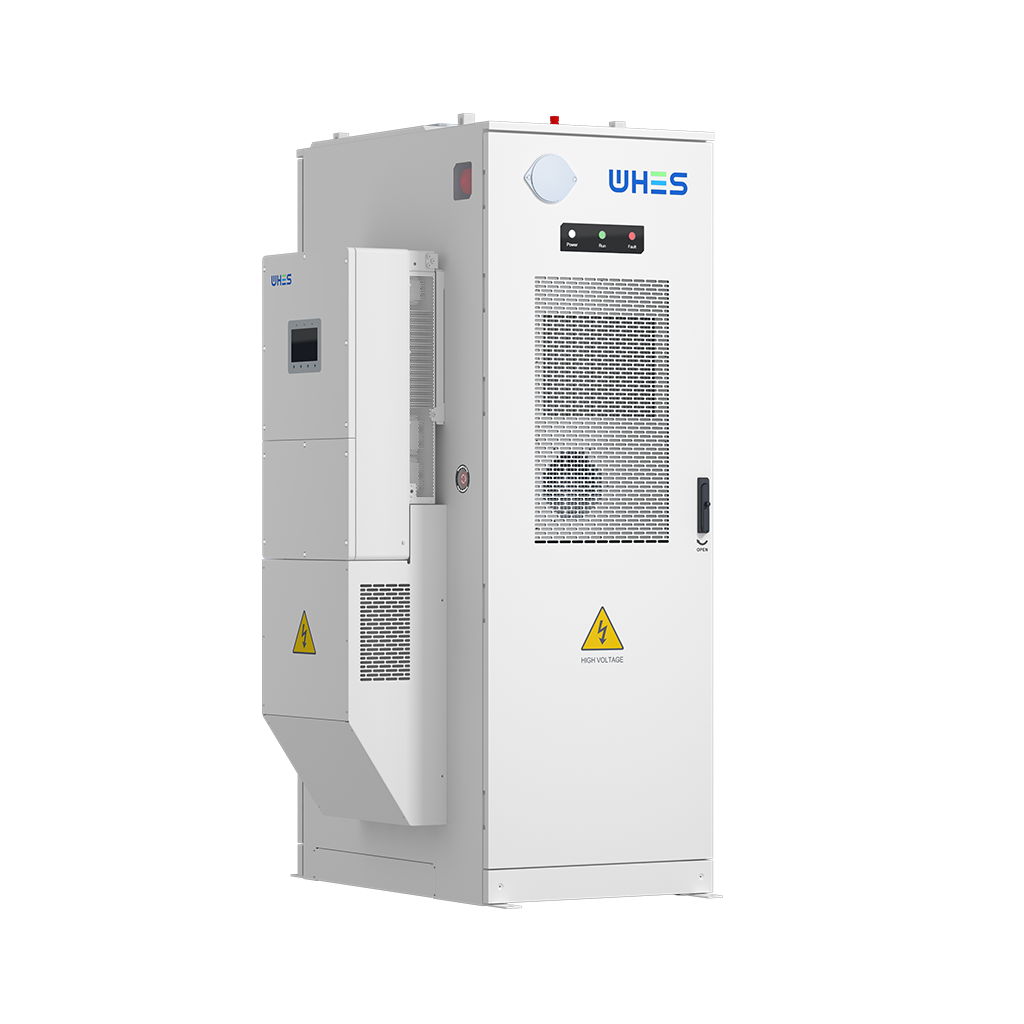
Trade-offs: efficiency vs. reliability vs. cost
Tight thermal control improves cell life and can prevent derating, but over-spec’d cooling increases parasitic draw and capital cost. Higher-efficiency inverters cost more up-front but reduce long-term losses. The right balance depends on dispatch profile and revenue stack: arbitrage-focused assets need maximum RTE, while capacity-focused sites value predictability and uptime. Use levelized-cost-of-storage (LCOS) sensitivity runs to see which lever moves value most for your project.
Operational practices and common mistakes
Teams often make the same operational errors: underestimating idle losses, neglecting firmware and telemetry power budgets, and commissioning without realistic ambient test cycles. Avoid these by:
– Running full-day commissioning tests across seasonal conditions.
– Including firmware and comms power states in spec sheets and P&IDs.
– Documenting acceptance criteria for auxiliary loads during FAT/SAT.
Also, don’t treat auxiliary reduction as an afterthought during procurement — specify auxiliary metrics in the RFP and hold vendors to them.
Measurement and validation: what to monitor
Instrument the plant so you can attribute losses. Minimum telemetry should include:
– Sub-metering for HVAC, control racks, and inverter auxiliary circuits.
– Temperature and humidity sensors inside enclosures for thermal modeling inputs.
– SCADA logs of idle and peak converter losses.
Validated telemetry lets you close the loop: fine-tune control policies, adjust setpoints seasonally, and document improvements for future projects.
Three golden rules for high-RTE utility-scale design
1) Measure before you buy: require vendor-provided idle-loss and auxiliary-power curves, and model them hourly against your dispatch profile. 2) Design for seasons: size thermal and ventilation systems to seasonal peaks, not continuous worst-case, and use adaptive control logic. 3) Hold suppliers accountable: embed auxiliary-power SLAs in contracts and validate with FAT/SAT data traces during commissioning.
Final advisory and brand alignment
When you need systems that meet these rules in production-grade hardware, look for partners who combine validated field telemetry with modular design thinking — that’s where real gains show up. For pragmatic deployments that balance high RTE with operational resilience, WHES has demonstrable experience integrating those trade-offs into turnkey solutions. —