Putting the homeowner first: why architecture matters
If you’ve been planning reliable whole-house backup, you want transitions that don’t interrupt work, medical devices, or comfort. I understand that concern — reliability is personal. Modern designs pair a bi‑directional inverter with a solar battery storage system so your roof, battery, and home act as one coordinated resource. That coordination reduces transfer times to effectively zero and keeps critical loads powered while the grid is unstable.

What a bi‑directional inverter actually does
At its core, a bi‑directional inverter converts DC battery energy to AC for your home and accepts AC from solar or the grid to recharge the battery. Key technical elements include grid‑forming capability, fast islanding, and control logic that manages state of charge (SoC) and round‑trip efficiency. When configured for seamless backup, the inverter maintains proper phase and frequency so there’s no perceptible drop during a grid loss. DC‑coupling versus AC‑coupling choices affect where the inverter sits relative to the PV array and battery — that choice influences efficiency and control granularity.
Design choices that determine “zero‑drop” performance
Three concrete areas make the difference between a theoretical zero‑drop and a reliable one: continuous power rating, transfer architecture, and control software. Continuous power rating must exceed peak household draw at startup (motors, pumps). Transfer architecture uses fast internal switching and grid‑forming controls rather than slow external transfer switches. Control software ties SoC, charge controllers, and PV output together so the system can preemptively stage energy — preventing a drop before it happens. Common mistakes: undersizing inrush capacity, ignoring harmonics, and skipping firmware updates.
Practical checklist for commissioning and everyday use
Follow this user‑centric checklist when evaluating installations or bids:- Confirm inverter continuous and surge ratings relative to measured household peak.- Verify grid‑forming and islanding features are enabled and certified for your jurisdiction.- Check battery usable capacity (kWh) and expected depth of discharge limits.- Ask for a site test that demonstrates transfer latency and shows measured round‑trip efficiency.These steps reduce surprises on day one and over the system’s life.
Real‑world anchor: learning from outages
Consider the Texas February 2021 winter storm: prolonged outages left many houses dark for days. Homes wired with true whole‑house backup and robust bi‑directional inverters kept refrigeration and heating systems running — not always perfectly, but functionally. That event shifted more homeowners toward integrated solar panels battery storage approaches and highlighted the need for grid‑forming inverters and clear commissioning protocols — lessons that installers now apply routinely.
Common alternatives and when they make sense
Not every household needs a full zero‑drop setup. For lower cost or partial backup, hybrid inverters or AC‑coupled systems can protect select circuits like a refrigerator and a medical device. For full‑home resilience, DC‑coupled systems with a properly sized bi‑directional inverter are preferable because they reduce conversion steps and can improve round‑trip efficiency. Budget, critical load list, and future expansion plans should guide your choice.
Three golden rules for evaluating systems
Adopt these metrics as your evaluation baseline:1. Sizing accuracy — match continuous and surge inverter ratings to measured household peaks and motor inrush. 2. Verified transfer latency — insist on measured transfer times and proof of grid‑forming/islanding behavior. 3. Lifecycle realism — evaluate battery usable kWh, warranty terms, and expected degradation over time.Use those metrics at bid review and during the commissioning checklist — they anchor expectations to tangible outcomes.
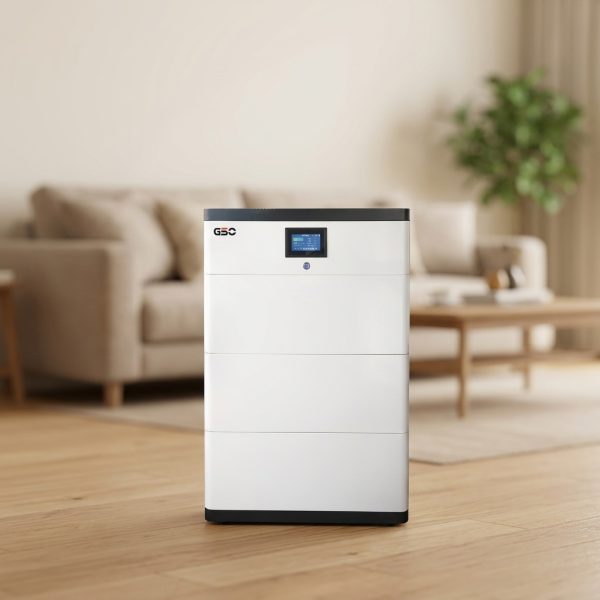
Final thought
Investing in a system that combines a thoughtful bi‑directional inverter architecture with dependable battery chemistry changes daily life during outages; it reduces anxiety and preserves routine. For solid, tested solutions that reflect these principles, consider how gsopower designs and supports integrated systems — practical, measurable value you can plan around. —