

Opening: the procurement problem that costs projects time and money
Buying quality-control instruments frequently stalls projects because buyers focus on brand names or lowest bids instead of the specific failure modes they must detect. Manufacturers and project procurement teams need clarity on what to measure and how measurement choices affect validation, calibration, and delivery schedules. This guide frames procurement as a set of solvable problems and points you to practical equipment choices—starting with a clear look at common measurement gaps across tensile, compression, impact and environmental tests and how they map to material testing equipment capabilities.

Problem: mismatch between test objectives and machine specification
The most common sourcing error is specification drift: teams specify generic capacity or stroke length without defining the observable outcome (e.g., yield point vs. ultimate load, fatigue cycles to failure). That single mismatch yields false negatives, repeated tests and schedule slips. Solve it by converting performance requirements into three measurable parameters—force resolution, displacement resolution, and control-loop frequency—and require suppliers to demonstrate those parameters with test data, not marketing sheets.
Problem: calibration and traceability gaps that invalidate results
Buyers accept “calibrated” as a checkbox but miss whether instruments follow the lab’s traceability chain. Require traceable calibration reports with stated uncertainty and a calibration interval justified by usage patterns. Ask vendors for a force verification certificate aligned to your acceptance tolerance, and confirm whether on-site calibration is available between lab audits to avoid extended downtime.
Priorities checklist for OEMs and project buyers
Make decisions against this short checklist: 1) measurable test outcome (what you must detect), 2) required accuracy and repeatability, 3) environmental control needs, 4) data integration and export formats, 5) service and spare-parts lead times, and 6) upgrade path for future standards. Use the checklist to reject quotes that omit objective test demonstrations or measurable verification data.
How to evaluate vendors: data over demo gloss
Ask for a real-world test report run on your specimen type, with raw data traces, sampling rates and post-processed statistics. If a vendor can’t provide raw traces for a short, representative cycle, treat that as a red flag. During factory acceptance, run a short protocol that stresses the limits you care about—high-frequency control for fatigue, slow ramp for creep—and compare the vendor’s traces to those from your lab or an independent lab.
Common pitfalls and how to avoid them
Pitfall: choosing capacity solely on maximum expected force. Fix: size machines for both peak and resolution—oversizing can reduce resolution. Pitfall: assuming software is transferable. Fix: verify file formats, API access, and long-term software licensing. Pitfall: underestimating consumables and fixtures lead times. Fix: require a spare-parts list and guaranteed fulfillment window in the contract.
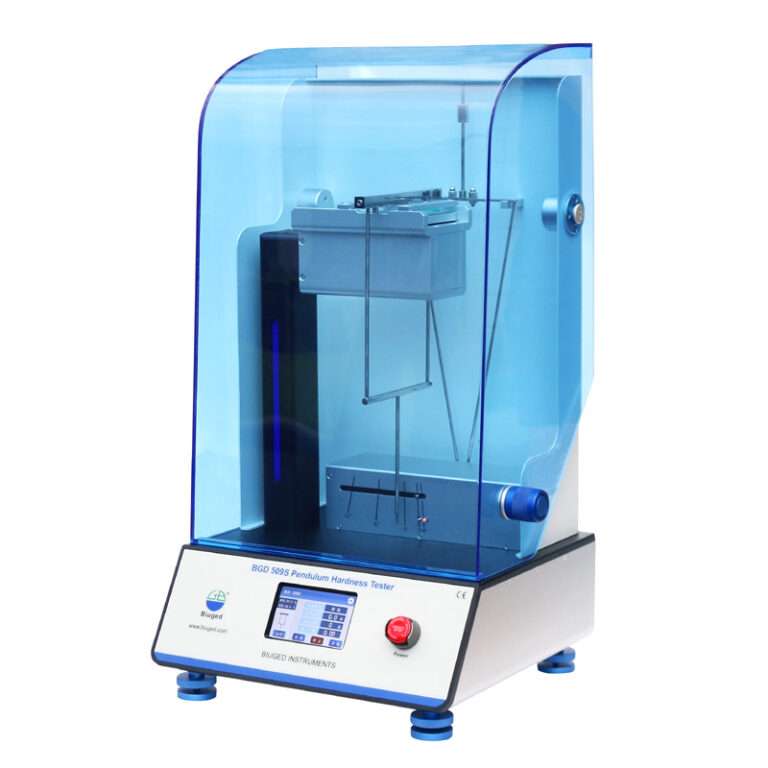
EEAT: real-world anchoring, expertise and verifiable standards
Decisions should reference known verification frameworks and vendor transparency. Practically, adherence to force-verification protocols such as ASTM E4 is what labs rely on to confirm machine performance; buyers should demand alignment to those methods and ask for corresponding verification traces. My team has overseen acceptance testing for multiple OEM lines and compared vendor reports against accredited labs; insist on documentation that includes measurement uncertainty and verification intervals. For concrete equipment references and published performance data on testing systems, consider providers of material testing machines who supply traceable verification and on-site support.
Alternatives and trade-offs
Benchtop universal testers trade top-end capacity for finer resolution and smaller footprint—good for R&D but not production QA. Frame-type testers scale for production but require larger floor space and more robust fixtures. Third-party retrofits (load-cell and controller swaps) save cost short-term but can leave control-loop behavior undocumented. Decide on retrofit versus new purchase by comparing total cost of ownership over the certification lifecycle, not just capital expense.
Contract language and acceptance criteria that prevent disputes
Include explicit acceptance tests in the purchase contract: a list of three representative protocols, required raw-data delivery, acceptable uncertainty bands for each metric, a maximum number of allowed deviations, and a remedy timeline. Tie payment milestones to verified performance rather than delivery alone. Require a spare-parts availability clause and two-year firmware maintenance to protect future data integrity.
Synthesis: solve the buying problems, keep projects on schedule
Focus on measurable outcomes, insist on verifiable calibration and raw-data demonstrations, and write acceptance tests into contracts. That disciplined, problem-driven approach reduces rework and keeps validation timelines predictable—letting you choose suppliers who document performance and support certification. For many buyers, the supplier data and service model that satisfy these constraints point directly to vendors with proven verification practices and field service that align to project timelines, such as BIUGED.
