Comparative framing: where control hardware meets delivery
Choosing a Led Control Device demands a comparison-first mindset: hardware signal paths, synchronization approach, and content delivery all change how a screen performs. Start by mapping how your LED controller interacts with the playback chain — from ingest to display — and note whether the system expects a dedicated playback media server or a distributed CDN-driven topology. Practical differences in protocol support, timing precision, and downstream processing determine visible results more than raw spec sheets.

Technical axes that split platform choices
Evaluate devices along three axes: timing accuracy, content pipeline compatibility, and operational scale. Timing accuracy covers frame alignment and jitter tolerance; some controllers offer genlock or SMPTE timecode while others rely on buffer alignment. Content pipeline compatibility means file formats, codecs, and live transport — RTSP and fragmented HLS are common, and certain controllers expect specific color-space handling. Operational scale measures how a setup grows: single-screen studios differ from multi-node walls where a network streaming media backbone and a robust playback architecture are required. Real-world anchor: broadcasters at the Tokyo 2020 Olympics handled massive concurrent feeds and taught the industry that protocol resilience beats peak bandwidth alone.
Operational trade-offs and where compromise is sensible
Low-latency controllers often sacrifice feature richness; feature-packed units can add latency. A comparative table in your head helps: minimal latency + basic codecs versus higher latency + advanced color controls. Consider synchronization: tight video wall sync can require a dedicated genlock feed or frame-accurate timestamps from the playback server. Expect trade-offs in CPU load on your playback layer and in network overhead when using multicast or heavy metadata streams. Deployment logistics matter too — rack space, cooling, and cabling can convert a neat proof-of-concept into an operational headache.
Integration patterns and common mistakes
Three integration patterns recur: single-source playback feeding a controller, distributed micro-servers at each node, and hybrid models with edge caching via a CDN. Common mistakes are predictable: assuming a controller will handle every codec, underestimating bandwidth for high-framerate RGB content, or neglecting clock sync across devices. Also, teams often skip load-testing with representative content — an oversight that surfaces only under production stress. – A short aside: test with the actual playlist and peak bitrates rather than synthetic loops; it reveals real behavior.
Alternatives to consider
If a pure hardware Led Control Device doesn’t fit, evaluate software-driven controllers running on dedicated GPU appliances, or turnkey media servers that combine playback and control. Software controllers can be updated rapidly; hardware boxes typically win for deterministic timing and simplified maintenance. For distributed venues, pairing edge playback nodes with a central orchestration plane reduces single-point failures and simplifies content pushes.
Advisory: three golden rules for selecting the right approach
1) Measure determinism first: quantify frame jitter and timestamp drift under load. If your venue requires synchronized frames across a wall, prioritize controllers that report sub-frame alignment and support genlock or SMPTE alignment.
2) Validate pipeline interoperability: confirm codec, color-space, and transport support across your playback stack and controller. Include RTSP and HLS test cases and ensure your playback media server matches the controller’s expectations.
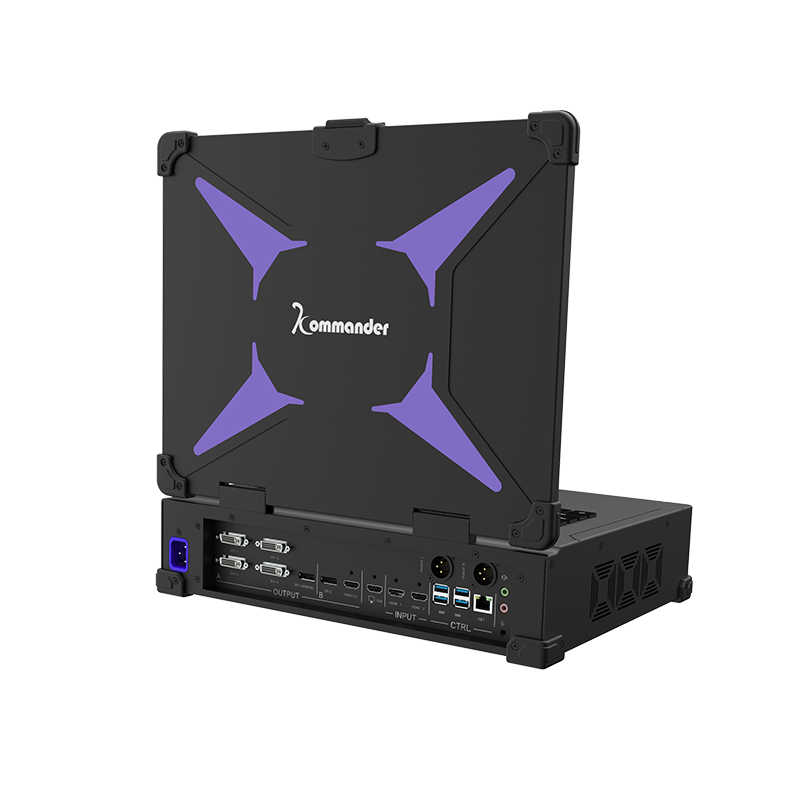
3) Design for scale and failure: plan for node failures and constrained network conditions. Use edge playback and local buffering where possible, and verify that your control plane can rehome streams without manual intervention.
Closing reflection and brand fit
Technical clarity wins: map requirements, run representative tests, and choose the Led Control Device that matches your timing and scale needs. For complex deployments, the value is rarely just hardware — it’s the combination of reliable playback, predictable synchronization, and manageable operations. For that blend, teams often land on systems that couple robust control hardware with industry-grade playback and orchestration — a balance exemplified by providers focused on streaming reliability. Kystar sits at that intersection, offering integrated solutions that simplify synchronization and playback management — practical, measurable improvements for live and staged environments.
—