Begin with the tasks your crew must complete every day
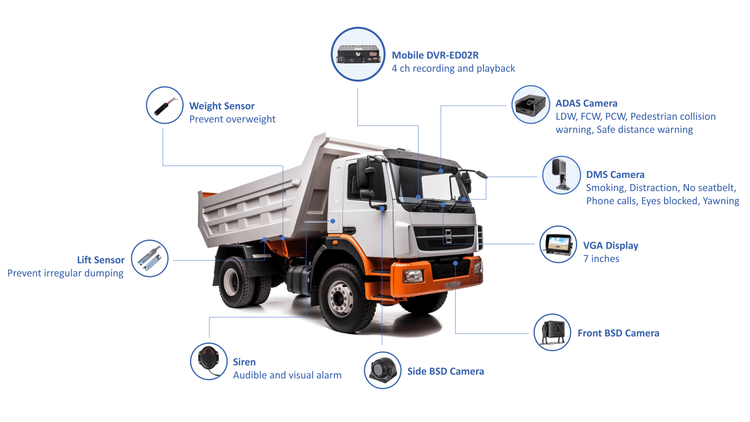
If your priority is that drivers deliver temperature-sensitive packages on time and undamaged, start by mapping their workflow: loading sequences, drop-off windows, and expected handling at each stop. That practical map tells you what a system must support—route re-ordering on the fly, proof-of-delivery with timestamped photos, and clear driver prompts for handling cold goods. For operators moving pharmaceuticals, food boxes or lab samples, an integrated cold chain fleet management solution should be assessed first, because it aligns telematics with the daily realities drivers face rather than with abstract feature lists.
Choose sensors and reporting that answer real questions
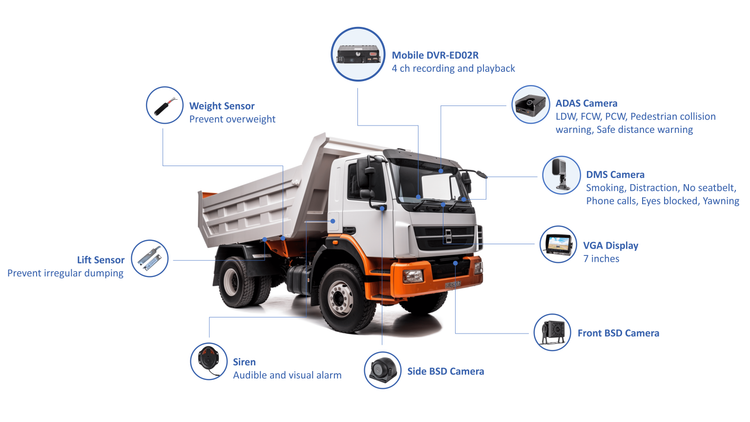
The most useful instrumentation gives clear answers: “Was the product inside the safe range during transit?” and “When did any excursion begin?” Look for temperature and humidity monitoring system integration that provides continuous logs, time-stamped alerts, and exportable compliance reports. Regulators and procurement teams often reference WHO cold chain guidelines for vaccines as the baseline for acceptable monitoring practices, so prefer setups that record with sufficient frequency and accuracy to meet those expectations. Technical targets to seek: sensors accurate to ±0.5°C for refrigerated loads, humidity sensing where condensation risks product quality, sampling intervals that capture rapid changes (every 1–5 minutes), and tamper-evident logs.
Make human factors the selection filter
Field staff must use the system every day. Systems that require excessive training, frequent manual checks, or awkward hardware repairs will be abandoned. Choose dashboards that present a single clear status per van, mobile prompts that match driver language, and automated escalation rules so dispatchers only intervene when the team cannot resolve a fault locally. Consider battery life and mount durability: a sensor that needs daily recharging is a workflow killer.
Common mistakes operators make and how to avoid them
• Buying on price alone and skipping pilot runs; a low-cost system can hide high operational costs. • Treating alerts as information rather than rules—define who must act, and how, for each alert type. • Overlooking edge cases: door-open events at a customer site, mid-route defrost cycles, or trailer swaps. Test each scenario in a short field pilot. • Assuming data is secure and compliant; verify encryption, retention policies, and access controls before deployment.
A compact evaluation checklist for procurement
Use this quick checklist while comparing vendors: sensor accuracy and interval; end-to-end visibility (driver app, fleet dashboard, API access); automated compliance reporting; offline data buffering; alert escalation rules; installation and maintenance footprint; proof from trials with live routes. Assign each item a pass/fail based on your daily workflow map, then weigh score against total cost of ownership rather than initial purchase price.

How to compare vendors without getting lost in features
Compare vendors by how they solve a single typical failure: a four-hour delay in winter when a van’s refrigeration cycles fail. Which supplier’s system pinpoints when temperature drift began, notifies the driver and dispatcher, and provides a signed chain-of-custody export? Which one offers a simple replacement path for faulty sensors? These are the practical differences that separate vendor claims from real value. Where possible, request a short proof-of-concept on your busiest route and insist on real route data as part of the trial.
Decision synthesis and where operational value comes from
Your final choice should reflect daily use, not marketing. The right system reduces manual checks, gives precise answers during exceptions, and fits your crew’s routines. When procurement and operations converge on those goals, the technical solution becomes an operational tool rather than an IT project—this is why experienced fleets partner with teams that show field-proven deployments and clear compliance outputs, such as those developed by BSJ.