

Introduction — a question that won’t let go
Have you ever stood in a dim factory bay and felt the hum under your feet — then wondered which machine will fail next? I remember one night when a late-run packing line stopped for no obvious reason; an electric motor was whisper-quiet before it went dead. Field notes later showed a rise in surface temps and a subtle vibration pattern (we logged it), and the data said roughly 18–22% of similar stoppages trace back to overheating or control drift. So what signals should we watch, and how do we separate real faults from noise?
That question has followed me through inspections and design meetings. I’ll be frank: the usual checklists often miss the slow-moving problems — tiny torque dips, creeping imbalance, sensor jitter — the things you don’t spot until the line is down and everyone’s blaming the last thing that touched it. I’ll walk you through what I look for, why the common fixes mislead, and where real gains hide. Let’s peel back the layers and get practical; next, we examine why standard approaches fall short.
Why conventional checks fail: a technical look at the flaws
Start with a clear definition. When I say electric motors fail to meet expectations, I mean they drift out of spec in ways standard inspections do not catch. Most teams still rely on basic vibration scans, quick insulation tests, and simple current checks. Those matter, but they miss dynamic problems like torque ripple or rotor eccentricity that show up only under specific loading and during repeated thermal cycles. Field-oriented control adjustments can hide symptoms while the root cause grows—so an entire control layer can give you a false sense of security.
What exactly slips through?
Look, it’s simpler than you think: sensors age, power converters introduce harmonics, and thermal gradients create stress points. I’ve seen units where the encoder drifted just enough to confuse the feedback loop, producing intermittent stalls that looked like external load issues. In another case, a loose bearing changed the vibration signature only at mid-range RPMs — utter silence during a quick check, chaos under real duty. We need checks that mimic real use: ramp profiles, prolonged torque holds, thermal soak tests. These detect sensorless control failures and creeping misalignments before the production manager calls me at 2 a.m. — funny how that works, right?
Looking ahead: case example and practical metrics
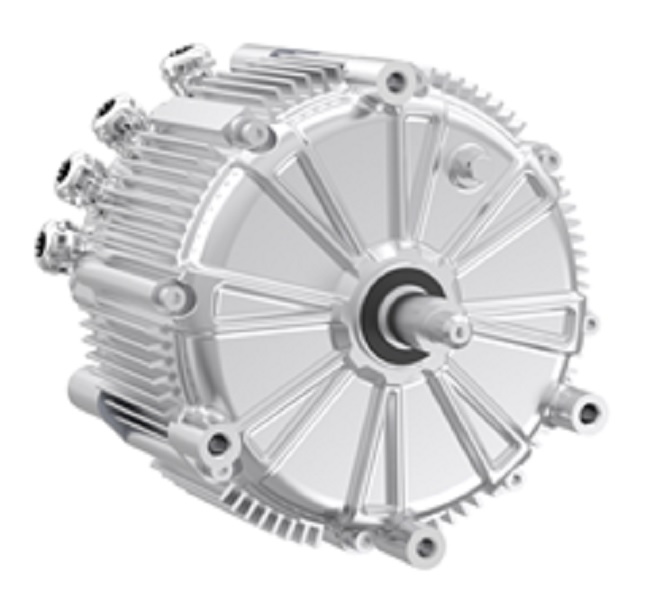
Let me bring this forward with a short case and what I’d change. We retrofitted a packaging line with a modern control scheme and swapped a few legacy drives for a pmsm motor — specifically a pmsm motor in one workstation. After implementing extended diagnostic logging and a simple phase-current analysis, we caught torque dips and harmonic spikes that the old system had masked. The fix was not glamorous: better thermal management, tightened mounting, and tuned field-oriented control parameters. Within weeks, downtime dropped and the unit ran cooler. The lesson? Combine hardware fixes with smarter monitoring (edge data points, current signature analysis) to catch creeping failures early.

What’s next — how to evaluate new solutions
If you’re choosing upgrades, here are three metrics I personally use to judge success: 1) Mean Time Between Functional Failures under real load profiles; 2) Thermal variance across steady-state runs; 3) Signature stability of phase currents (harmonic content and torque ripple). These give measurable outcomes, not just checkboxes. I’m not saying every shop needs full telemetry — but adding targeted diagnostics changes the conversation from reactive to preventative. We found that modest investments in diagnostics and a better-matched Santroll motor spec delivered clear ROI in weeks, not months. And yes — some fixes are cheap; others take commitment. Either way, I’d rather know what’s coming than be surprised on the line.
