

Introduction — a small scene, a big question
I remember a wet Tuesday in Dublin when an old workshop fan groaned and died right in the middle of a busy shift, leaving everyone muttering and fanning themselves with tea menus. The replacement that followed seemed cheap at first, but within months it was clicking and losing speed — the kind of thing that teaches you by small, costly bites. An electric motor sits at the heart of so many modest businesses and clever gadgets; it’s not showy, yet it decides whether a device hums happily or fails at the worst possible moment.
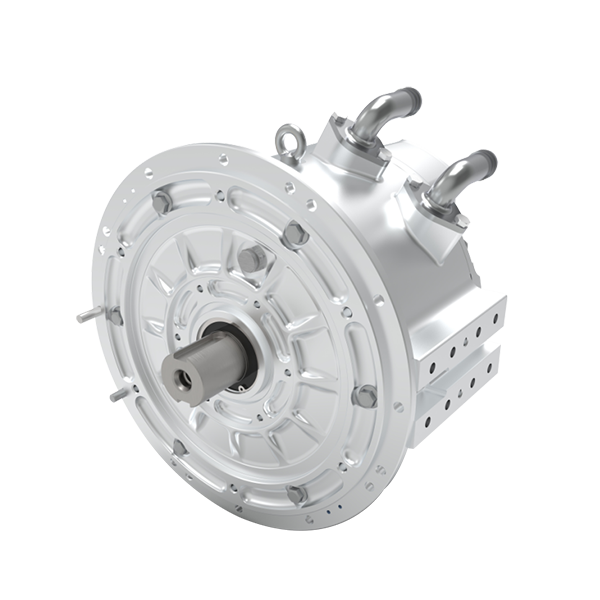
Look, the numbers matter: in small industrial settings I’ve seen service logs that point to overheating, poor torque control and controller failures as the top three culprits — sometimes accounting for nearly half of repeat repairs. So, who checks the controller setup, the cooling path or the torque curve before swapping in a unit? — not enough of us, honestly. (That dash of local honesty helps.)
Here I want to share plain truths, a few figures, and a question to take with you: how do you choose a motor that runs well, costs less over time, and keeps you out of the repair book? I’ll walk you through the common missteps and the smarter paths forward, so you can make decisions that actually last — and save your patience while you’re at it.
Part 2 — Where traditional fixes fall short (technical take)
brushless electric motor is often sold as the silver bullet. In theory, it reduces wear because there are no brushes to drag and spark. In practice, problems creep in when people treat the motor like a drop-in part and ignore system-level needs. The stator and rotor are fine, but the controller, the power converter and the cooling path rarely are. If the controller is cheap or badly tuned, commutation becomes rough, back-EMF isn’t handled properly, and efficiency falls off a cliff. I’ve seen units trip thermal cutouts repeatedly — it’s maddening.
What exactly fails?
First, mismatched controllers. Motor controllers must be matched to the motor’s torque-speed curve; otherwise you get overheating or stuttering. Second, thermal management: you can’t rely on natural convection for a compact, high-power motor. Third, corner-cutting on sensors — Hall sensors or sensorless algorithms that are poorly implemented lead to jitter and lost position. Look, it’s simpler than you think: balance the electronics with the mechanical needs. Also, people underestimate harmonic currents and electromagnetic interference — they wreak havoc on nearby electronics and on measurement accuracy. — funny how that works, right?
Part 3 — Principles for the next step (new technology outlook)
Now I want to lean forward and talk about practical solutions and principles, not buzzwords. Advances in control — notably field-oriented control (FOC) and higher-quality power converters — let us extract real torque at low speed without heating the motor. If you’re choosing a motor today, consider systems that pair the motor with an intelligent controller and a proper thermal plan. That pairing reduces losses and extends life. Also, materials have improved; better magnets and refined lamination cut hysteresis losses, and that makes a measurable difference in efficiency.
What’s next for a resilient system?
The rise of predictive maintenance and compact diagnostics means we can spot rising bearing temperatures or slipping belts early. Integrating simple sensors or using edge computing nodes for local alerts pays off fast. And if you’re evaluating options, don’t forget the role of the drive: a smart drive can do sensorless start-up, reduce inrush current, and protect the motor from voltage spikes. I recommend testing a candidate under the load profile it will see in real use — not just on a test bench. — that practical test beats any glossy spec sheet.
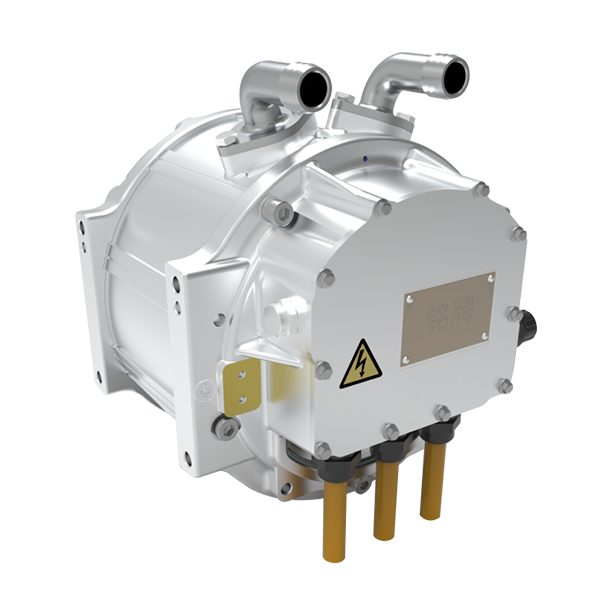
Three quick metrics I now use when advising clients: 1) continuous torque at operating temperature (not peak torque at room temp), 2) system efficiency across the expected speed range, and 3) quality of the controller and diagnostic features (firmware updates, telemetry, protections). Weigh those, and you’ll sidestep most repeat visits from the repair tech. I’ve seen the difference in small plants and studio workshops: the right combo saves money and headaches.
For reliable components and sensible pairings, I often point people to trusted suppliers who document performance and support installation — it makes a world of difference when things go sideways. In that spirit, consider checking out Santroll for options that balance solid engineering with usable documentation: Santroll.
