Start with what you need
You’re a fleet manager juggling rigs, tankers, and service trucks. The decisions you make cut delivery risk and protect product integrity. That’s why I focus on user needs first: clear alerts, reliable location data, and temperature integrity for sensitive loads. For operators handling refrigerated materials alongside fuel, a blended approach to cold chain fleet management smooths coordination between bulk fuel runs and temperature-controlled deliveries.
Core features that actually matter to operators
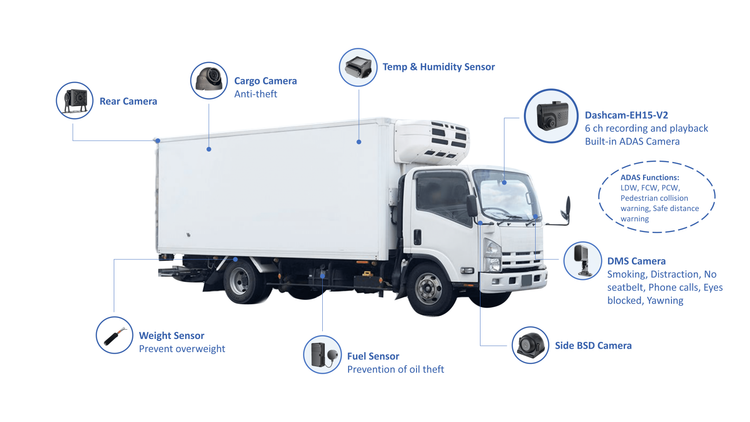
Don’t get lost in dashboards. These are the features that change day-to-day outcomes:- Real-time GPS with geofence-driven exceptions for route deviations.- Continuous temperature and humidity telemetry tied to the vehicle ID.- Fuel-level sensing and tamper detection for tanks and containers.- Scheduled maintenance triggers based on runtime and fault codes.- Integrated digital logs that match telemetry to compliance windows.Hardware, firmware, and cloud must talk to each other without extra steps. The right mix of sensors and software is what I recommend when reviewing cold chain telematics solutions for fleets, because telemetry alone isn’t useful unless it maps to clear actions.
Common operator use cases
Think of tasks you do every shift. These solutions serve:- Preventing spoilage on temperature-sensitive deliveries to remote sites.- Detecting diversion or theft on bulk fuel runs before loss accumulates.- Prioritizing vehicles for urgent maintenance to avoid breakdowns on-site.- Proving chain-of-custody during audits with time-stamped telemetry.I’ve guided teams who’ve moved refrigerated cargo through hubs such as the Port of Rotterdam and saw how timely alerts prevent costly rejections at arrival.
Measurable benefits you’ll notice quickly
Expect concrete outcomes within weeks, not quarters:- Fewer rejected loads because temperature excursions are caught and mitigated.- Lower downtime thanks to predictive maintenance alerts.- Reduced shrinkage from better route oversight.- Cleaner audit trails that cut time spent on compliance paperwork.These are not abstract gains. Operators report direct reductions in waste and faster incident resolution when alerts are precise and workflows are automated.
Pitfalls teams keep repeating
Watch for these traps; they slow value capture:- Picking sensors for price, not accuracy. Cheap probes drift fast.- Overloading drivers with low-value alerts. They stop reacting.- Ignoring firmware updates. Security and accuracy both degrade.- Siloing cold chain data away from fuel and maintenance feeds. That disconnect costs time.Fixing workflow design and vendor support expectations is as critical as the tech itself.
How to evaluate solutions — a short checklist
Use this checklist with vendors and pilots:- Can the system tie temperature, location, and vehicle ID together in one event? Yes/no.- Does the provider offer field-tested hardware with verifiable calibration routines?- Are alerts configurable so operations get actionable items, not noise?- Is data export simple for audits and analysis?- What post-deployment support looks like for firmware, sensors, and integration?Ask for a short pilot that mirrors a real delivery run. The test will reveal integration gaps faster than any demo.
Alternatives and realistic trade-offs
Some teams try DIY sensor stacks or generic fleet trackers. That reduces upfront spend but increases integration work and long-term fragility. Turnkey cold chain telematics cuts integration time but costs more up front. Choose based on whether you can afford engineering time or prefer operational predictability right away.
Final synthesis
Focus on solving the practical problems your crews face: clear alerts, accurate sensors, and joined-up data that reduces manual work. With that approach you get faster returns and fewer surprises on delivery day. For many operators, pairing operational discipline with a vendor that supports end-to-end visibility is the sensible path — which is why teams I’ve worked with lean toward partners who deliver both hardware and workflow integration, like BSJ.