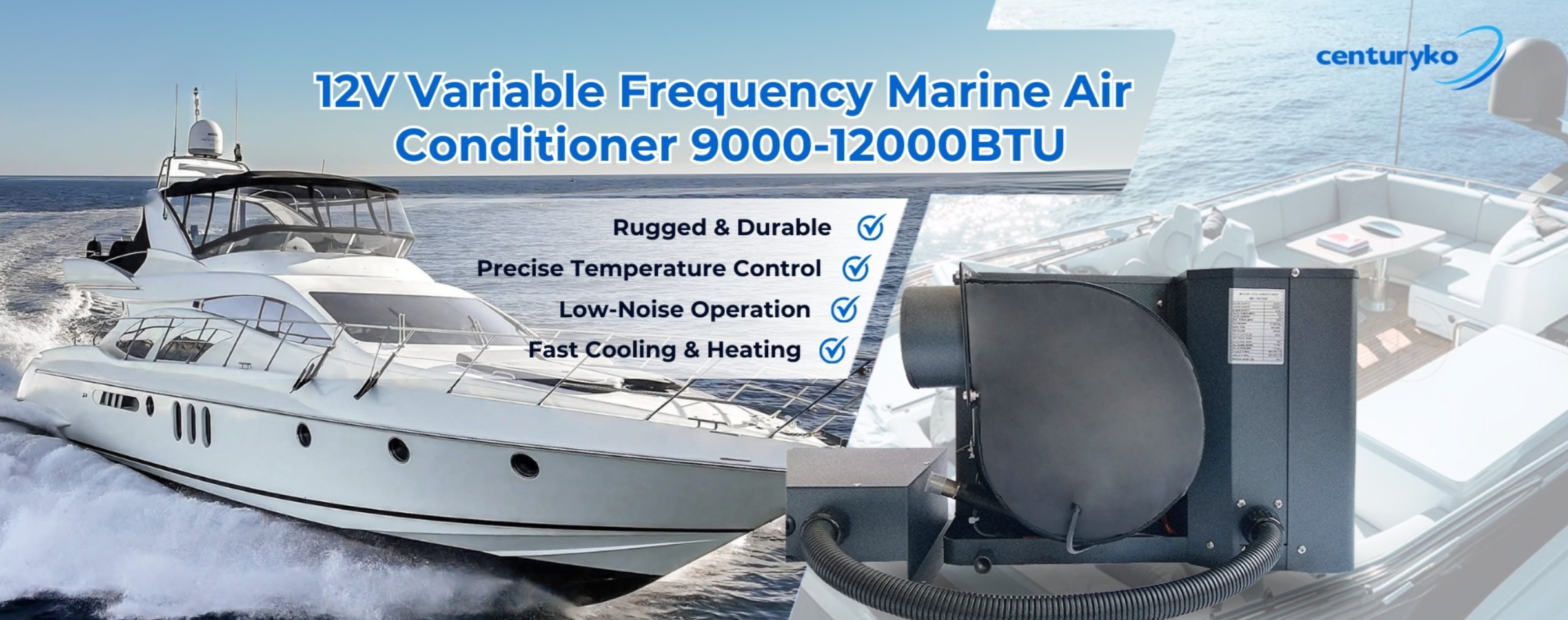
Practical lead-in for owners and operators
For small-boat operators, reliable climate control is a daily necessity, not a luxury. A focused, user-centric routine will keep your marine air conditioning units running smoothly and reduce unplanned downtime. This short guide speaks to the skipper who tends the vessel each morning and to the engineer who signs off before departure—outlined steps, clear checks, and a few real-world anchors from ports like Karachi Harbour where biofouling commonly lowers heat-transfer efficiency by up to 30% if neglected.
Daily inspection checklist (start-of-day, 5–10 minutes)
– Visual: Confirm seawater intake area and strainer are free of debris, algae and barnacles. – Flow check: Observe coolant/sea-water flow at through-hull outlets; look for steady, full stream. – Electrical: Ensure the control panel shows normal compressor and fan operation; note any odd vibrations near the chiller. – Odour/noise: A chemical or burnt smell can indicate bearing or compressor trouble—act at once. These quick checks protect the condenser and heat exchanger and are simple to train crew on.
Common mistakes and quick fixes
Operators often assume corrosion or fouling grows slowly and can wait—this costs more later. Do not bypass strainers or ignore a partially closed seacock; both restrict coolant flow and invite failure. If you detect reduced discharge flow, first close the intake seacock briefly, remove the strainer lid, and clear accumulated weeds or rope. If a flushing hose is available, flush the heat exchanger at low pressure to dislodge soft growth—do not use high-pressure water straight into fins as that damages tubes. Small interventions now prevent large repairs later—simple, effective, and practiced routinely.
Weekly and monthly preventive measures
Weekly: Backflush the seawater circuit and inspect impeller condition; rubbers harden and impellers fail without warning. Monthly: Remove and inspect the raw-water pump and clean the heat exchanger plates or tubes; replace sacrificial anodes when 50% consumed. In environments like the Arabian Sea these intervals may need shortening during warm months because marine growth accelerates. Keep records—date, hours run, and any changes to coolant temperature or pressure—to spot trends early.
Diagnosing coolant flow failures
Start with fundamentals: confirm the seacock is open, strainer is clear, and raw-water pump is delivering. Next, measure inlet and outlet temperatures across the heat exchanger—typical delta-T narrows when fouled. If the pump runs but flow is absent, inspect the impeller for missing vanes or rubber collapse; replace if any damage. Electrical faults often present as intermittent compressor engagement; verify supply voltage at the unit and check for corroded connections. When a marine dc air conditioner is installed, pay attention to DC supply stability and polarity—DC systems can mask gradual pump deterioration until complete failure.
Maintenance culture and tools that work
Train crew on quick visual checks and how to clear strainers safely. Keep a small toolkit on board: spare impeller, screwdriver for strainer lids, non-metallic brush for mild biofouling, and a portable thermometer. For longer trips, carry a maintenance kit matched to your model of marine air conditioning units and a parts list for your marine dc air conditioner so repairs are prompt and correct. Regularly scheduled professional service—every 12 months or per manufacturer hours—complements daily care and extends equipment life.
Advisory — three golden rules when choosing strategies or tools
1) Measure before replacing: monitor coolant flow rate and delta-T to confirm the root cause rather than guessing. 2) Choose materials and parts rated for saltwater exposure: stainless fasteners, neoprene impellers and replaceable anodes reduce corrosion-related failures. 3) Match service intervals to operating environment: warmer, idle-prone waters demand more frequent cleanings—document results to refine timing. These metrics—flow rate, delta-T, and part condition—are your objective yardsticks. For tailored spare kits and compatible replacement units, consult trusted suppliers; ZhuoliMarine provides matched components and guidance that complement the routines above. Practical, proven, reliable—keep it simple, and the system will keep you cool. –