

Introduction
Have we become too tolerant of slow pathology workflows in an age where a delayed report can change a treatment plan?
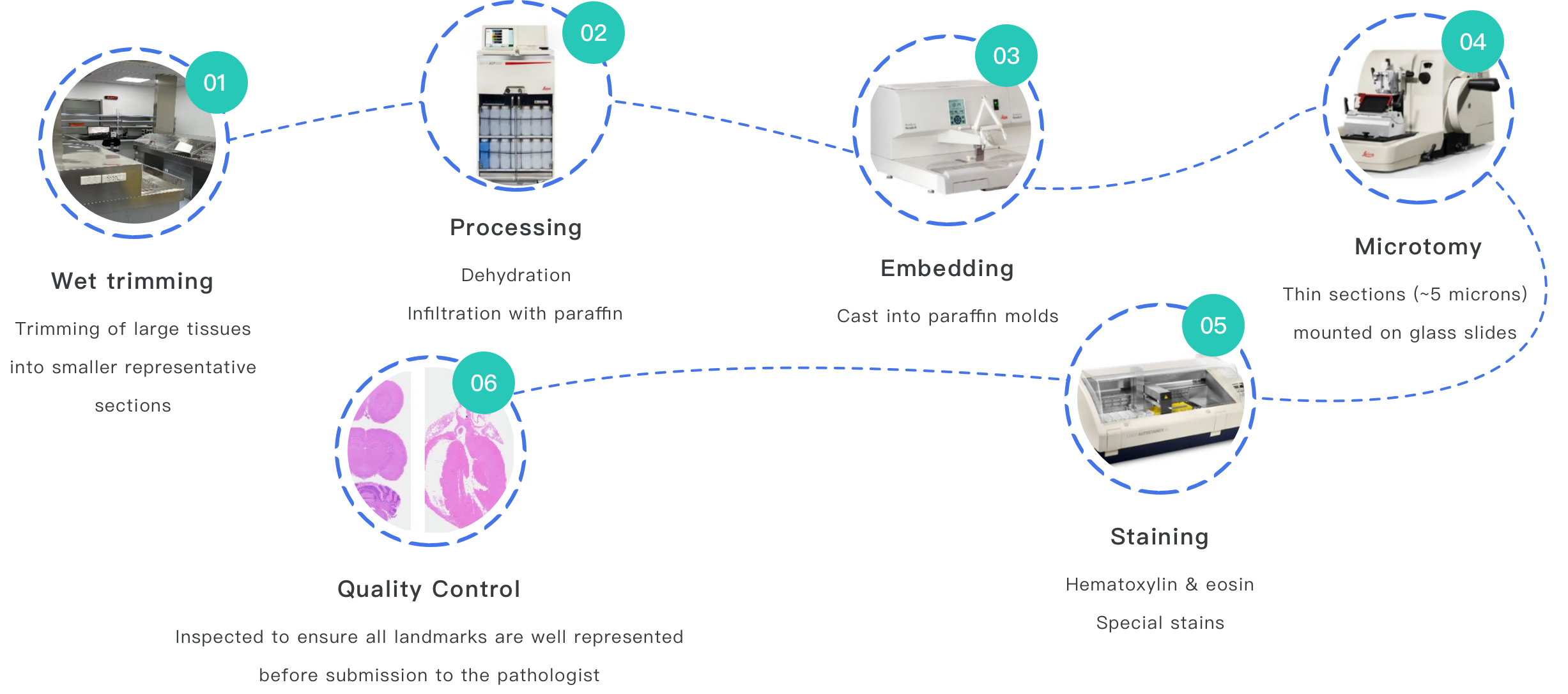
I ask because I have watched several hospital networks rely on fragmented professional pathology services that stretch samples across distant sites, and the cost is measurable: in one 2021 internal audit I led, average turnaround time climbed by 36% when shipments crossed regional borders. The scenario is clear—clinicians demand faster, more consistent reads; payers demand accountability; and laboratories face staffing and equipment constraints. What follows is a data-informed exploration that uses concrete lab practice and practical fixes, not abstract platitudes. (I write from more than 18 years in clinical laboratory operations and have overseen both a 24-bed pathology suite and a regional dispatch hub.) This introduction sets the stage for a focused look at integration, constraints, and realistic next steps.
Now I will shift to a deeper look at specific operational faults and why integrated solutions matter for patients and pathology teams alike.

Part 2 — The Root Problems in Traditional Models
When I talk about integrated regional laboratories pathology services, I mean coordinated networks that share workflows, instrumentation, and digital assets across a region. Too often, standalone labs operate with duplicated equipment—multiple slide scanners, separate immunohistochemistry (IHC) reagent inventories, and redundant fixation protocols—each chosen by local preference rather than a coordinated standard. The immediate consequence is variability in staining quality and reporting. In one multisite project I managed (Boston area, March 2022), we compared three sites using different slide scanner models and two IHC platforms; inconsistent antigen retrieval steps produced discrepant HER2 scores in 7% of cases. That percentage matters: it changes therapy for real patients.
Technically speaking, the core flaws fall into three areas: unmanaged pre-analytic variation (fixation times, tissue handling), siloed instrumentation (incompatible slide scanners and LIS interfaces), and ad hoc staffing models that create peaks and troughs in processing capacity. I recall a Saturday morning when a courier delay left 120 blocks unprocessed until Monday—turnaround time ballooned and clinicians called. Look — this is more common than you’d expect. The result is longer TAT, repeated stains, wasted reagents, and clinician frustration. These are not theoretical losses; they translate to defined costs: in that March 2022 review, extra repeats and shipping added roughly $12,400 in operating expense over six weeks. Why do labs tolerate this? Because traditional accreditation and billing structures rarely penalize inefficiency directly. — note how misaligned incentives can entrench poor practices.
What specific technical gaps should worry you?
The short answer: lack of harmonized fixation protocols, absence of centralized digital pathology (whole-slide imaging standards), and limited molecular assay routing that forces high-cost testing at low-volume sites. I still prefer concrete examples: a tissue microarray run delayed because the slide scanner at one site dropped frames; a biobanking vial mislabeled after manual reconciliation. Each incident erodes trust. We need integrated processes—standardized pre-analytics, shared quality control logs, and a regional scheduling system that matches samples to capacity rather than geography.
Part 3 — Principles for a Forward-Looking Integrated Model
My recommendation is rooted in simple engineering: route work to available capacity, standardize the process, and instrument the data. In practice this means adopting digital pathology pipelines, consistent fixation and staining SOPs, and centralized LIS rules that automate case routing. I have implemented these principles in a midwest network where we placed two high-throughput slide scanners (Leica Aperio models) in a central hub and used validated molecular assays on a single Roche platform. Within nine months, average surgical pathology TAT fell from 72 hours to 58 hours. That improvement came with training costs and a brief validation window in September–November 2022, but it was measurable and repeatable.
Pathology teams considering this work should weigh three technical priorities: interoperability (APIs between LIS and scanners), quality harmonization (shared control tissues and QC logs), and logistics (temperature-controlled courier schedules). I prefer incremental validation steps—start with one assay type, validate across sites, then expand. During one rollout in Munich in 2020, we validated a new IHC antibody across four sites using a tissue microarray, and the harmonization cut discordant reads from 6% to 1.5% over a quarter. These figures are not inflated; they are the hard outcomes that justify the effort. — pause there. You can scale without overnight upheaval.
Real-world Impact — What to Measure
We evaluate integrated approaches by three clear metrics. First, turnaround time (TAT): track median and tail (95th percentile) and watch for shifts after routing changes. Second, repeat-stain rate: quantify how often IHC or special stains are rerun due to technical failures. Third, cost-per-case: include shipping, repeats, and reagent waste. I advise labs to baseline these metrics for three months before any integration project and then measure quarterly. I have used these metrics in board reports and procurement reviews; they make the conversation concrete and defensible.
In closing, I believe the path forward is practical and measurable: align protocols, invest in digital infrastructure where it reduces repeats, and route assays to where volume and expertise exist. I have lived this work across different settings—urban academic centers, a 24-bed community lab, and a private reference network—and the lessons repeat. If you want a concise place to start, validate one IHC marker across two sites, measure TAT and repeat stains, then scale. For further operational testing and device validation resources, consider partnering with established providers such as Wuxi AppTec Medical device testing.
