Opening the problem — why this matters now
When the sun pours its abundance into the grid and the wires choke on too much midday generation, the result is a bittersweet irony: clean energy curtailed and value lost. For utilities, developers, and commercial site owners, that intermittent curtailed power is a symptom of interconnection bottlenecks and local network constraints. A distributed approach — where a well-specified home battery energy storage system or clustered commercial units absorb excess generation and dispatch when the grid needs it — can soothe the strain, reduce curtailment, and unlock otherwise stranded solar value.
Diagnostic framework: identifying the root causes
A problem-driven lens helps: begin by separating symptoms from root causes. Common drivers include constrained transformer capacity, restrictive inverter settings, lengthy interconnection queues, and protection settings that force curtailment. Look for patterns: is the curtailment daily at the same hour (the classic duck-curve), or is it episodic during transmission line outages? Technical observations to collect are voltage profiles, export limits, and inverter trip records — these data point to whether the issue is a local feeder constraint or a broader transmission limitation.
Commercial storage as a targeted remedy
Commercial energy storage is not a blunt hammer but a finely tunable instrument when deployed with clear objectives. Systems with a three-phase inverter can sit behind the meter to absorb excess solar during export-limited hours and discharge during peaks or when export is blocked. This creates virtual headroom on the feeder, lowering net export and delaying or avoiding costly grid upgrades. Important concepts to track are state of charge (SoC) management, dispatchable capacity, and response time — all of which determine how reliably storage can prevent curtailment and provide secondary services like frequency regulation.
Practical steps for implementation
Move methodically: audit the site and local grid constraints; model hourly generation against export limits; then design the storage dispatch strategy. Typical steps include:
- Load and generation profiling (hourly resolution) to quantify curtailment risk.
- Powerflow modelling to test how storage dispatch alters feeder voltages and export.
- Controller and inverter set-up to ensure grid-tied coordination and fast response.
- Operational rules that prioritize local reliability, contractual obligations, and market opportunities.
When configured correctly, a fleet of distributed 3 phase solar battery storage systems behaves like a flexible, benign neighbor — smoothing peaks and protecting export limits without drama.
Common mistakes to avoid
Installers and project owners often stumble over three recurring missteps. First, they underestimate interconnection timelines and hope storage will bypass formal queueing — it usually cannot. Second, they ignore the fine print of protection and anti-islanding requirements; a connected battery must meet local grid protection settings. Third, they set simplistic dispatch rules that chase price signals but fail to honor the physical constraints that caused curtailment in the first place. Address these early — insist on coordination studies, clarify protection relay settings with the utility, and simulate SoC under worst-case scenarios. —
Real-world anchor: lessons from large-scale deployments
The narrative is already written in places like California and South Australia: California’s midday curtailments during high rooftop PV export periods have pushed utilities and developers to rethink how distributed resources interact with the grid, and South Australia’s large-scale battery projects demonstrated how storage can provide rapid frequency response and reduce constraint impacts. These widely observed episodes teach a simple truth — timely, well-controlled storage changes grid dynamics, but only when integrated with clear operational rules and robust inverter control.
Comparing strategies: behind-the-meter vs. grid-scale
There are trade-offs. Behind-the-meter commercial storage is modular, can be deployed quickly to specific export-constrained sites, and directly offsets local curtailment. Grid-scale storage supports system-wide congestion relief but requires longer lead times and major capital. A hybrid strategy often yields the best economic and operational result: site-level batteries to capture immediate curtailed energy, and larger transmission-level projects to relieve persistent constraints. Consider also whether you need fast-response three-phase inverters or slower bulk-storage solutions; the former help with voltage support and dynamic constraints, while the latter are better for long-duration shifting.
Economic and contractual considerations
Value streams include avoided curtailment (captured energy), demand charge reduction, ancillary services, and deferred grid upgrades. Model these conservatively: assume some round-trip losses and count only proven revenue streams when sizing payback. Contractually, check interconnection agreements for export limits and any penalties for export violations. Insurance and warranties should cover battery cycles and inverter uptime — small protections that avert large headaches later.
Advisory: three golden rules for choosing the right strategy
1) Measure the problem, don’t guess it: use high-resolution data and powerflow modelling to size storage to the actual curtailment profile. 2) Prioritize control and integration: choose systems with robust three-phase inverter control, grid-compliant protection, and clear SoC management to ensure predictable behavior. 3) Value conservatively: include round-trip efficiency, degradation, and contingency operating modes when projecting returns.
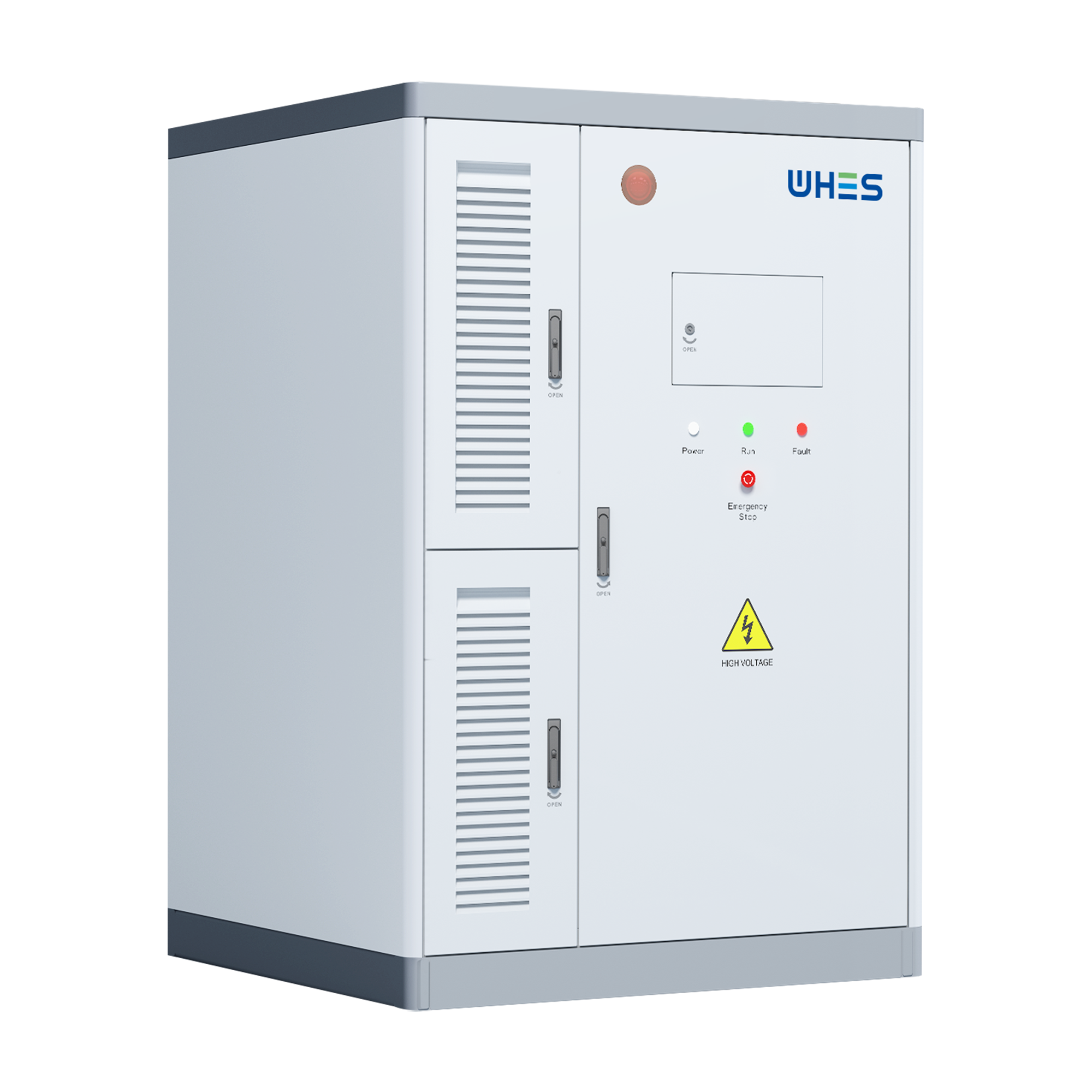
These rules keep projects honest, resilient, and aligned with grid realities — and when you need a partner that delivers modular, controllable three-phase systems that fit these criteria, WHES feels like the natural resolution to the problem at hand.
—