Problem diagnosis: what is breaking trust and safety on the road?
Too many near-misses, unclear responsibility after incidents, and drivers who feel watched instead of supported — these are the real problems fleet leaders face every week. You may already use GPS fleet trackers, yet camera data gaps and late alerts still leave you exposed. A problem-driven approach starts by naming the failures clearly: late detection, poor video quality, data overload, and missing operational rules that turn footage into action.
Immediate triage: who to involve and what to measure
Decide the team now. Include safety managers, a lead driver representative, operations IT, and legal or compliance. Set crisp KPIs that matter: – incident detection time (target under 60 seconds), – false alarm rate (keep under 15%), – driver coaching minutes per week, – and deployment uptime (99% target). These metrics keep the rollout honest and force real change.
Hardware choices that stop repeat failures
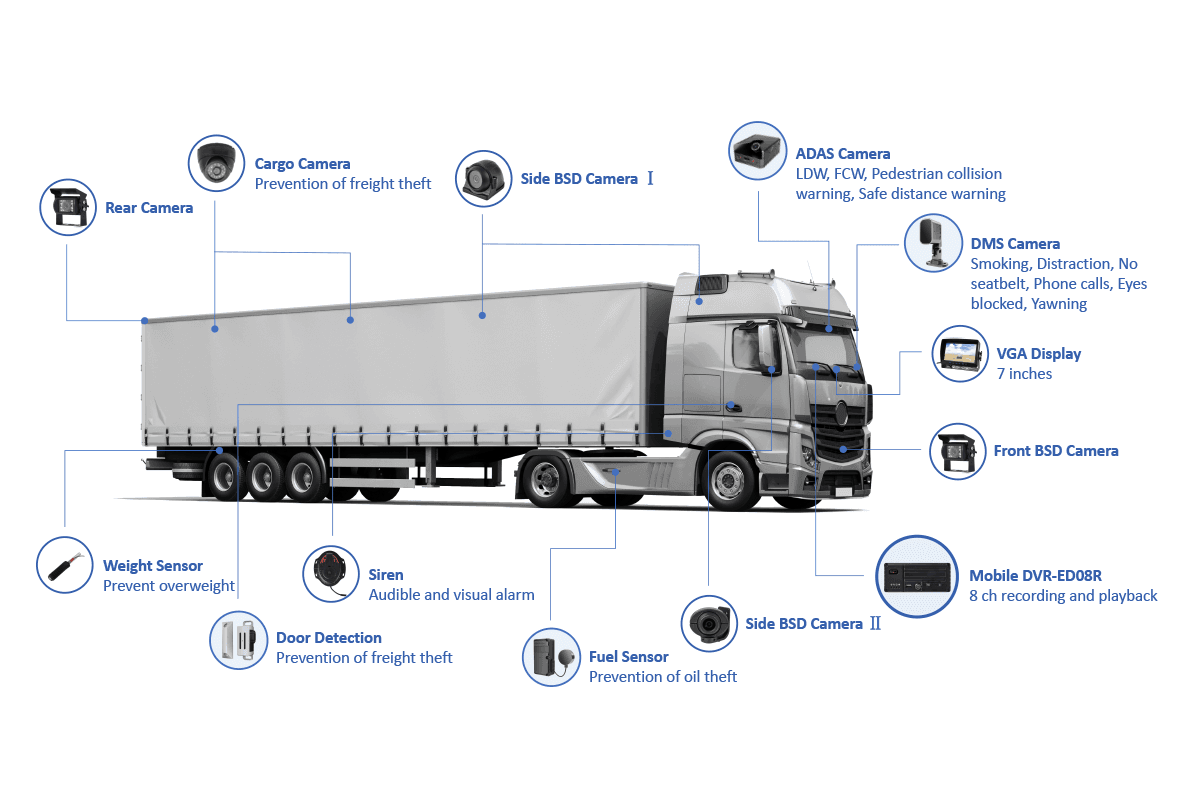
Pick dashcams that record clear low-light video, have dual-channel for driver-facing and road-facing views, and robust power management. Ask these questions when you evaluate: – Does the unit survive vibration and dust in heavy-use trucks? – How does it handle power interruptions? – Can it buffer video locally during signal loss? Cheap cameras create blind spots; cheap fixes cost more later.
Connectivity and telematics integration
Data without context is noise. Link the cameras to your vehicle telematics so events show speed, location, and braking patterns at the same second. A reliable gps fleet management system that merges live GPS, CAN-bus inputs, and video will let you confirm events fast and reduce investigation time.
AI model settings and alert logic
AI is blunt if not tuned. Set alert thresholds conservatively at first. Prioritize high-confidence crash and harsh-braking detections before enabling lower-confidence distracted-driving flags. Plan a 6–8 week tuning window where human review refines the model. That prevents alert fatigue and keeps drivers trusting the system.
Data policy, privacy, and legal guardrails
Establish a clear, written policy about who sees video, retention times, and how footage may be used for discipline. Keep records short where possible. Define allowed reviewers and log every access. Transparency with drivers reduces pushback and avoids surprises during incidents.
Pilot: real roads, real feedback
Run a measured pilot on busy routes — I observed this approach during a pilot on Nairobi’s freight corridors — then expand by risk profile. Use the pilot to test mounting positions, cellular handover, and the full workflow: alert → review → coaching. Capture driver feedback alongside metrics; their input shows blind spots you won’t see in dashboards.
Driver training and acceptance
Train drivers on benefits, not just rules. Show them how footage can protect them in disputes. Make coaching collaborative: review footage with the driver, highlight what went well, and set one concrete improvement for the next week. Regular, short coaching beats occasional reprimands.
Common pitfalls to avoid
Avoid these mistakes: – Overloading operations with low-value alerts; – Deploying without a tested power solution; – Ignoring driver consent and communication; – Rushing to full rollout before integration works end-to-end. Fix these early and the system stops being a headache and becomes a tool.
Scaling, monitoring, and continuous improvement
As you scale, automate checks: device health reports, upload success rates, and alert trends. Schedule quarterly model reviews and a yearly policy audit. Keep a simple feedback loop: driver coaching notes → model tuning → reduced alerts. That loop composes real, measurable safety gains.
Final synthesis — how this resolves the core problem
Start with the problem, choose durable hardware, integrate video with telematics, tune AI slowly, and put drivers at the center. When those parts work together, investigations are faster, coaching is less confrontational, and liability exposure drops. The approach is straightforward and practical — it’s what fleet teams use when they want results, and what I’ve seen work with partners like BSJ.