

Field failures define the problem
Retail shrink, delayed shipments, and incorrect recalls share one avoidable root cause: tags that pass factory checks but fail in the field. Manufacturers supply millions of RFID Labels each quarter; a small percentage of under-performing units produces disproportionate operational cost and reputational damage. This piece adopts a problem-driven lens: identify the failure modes, prioritize tests that catch them early, and align sampling with downstream risk.

Why rigorous, targeted QC matters — grounded expertise
One clear fact guides testing choices: many failure patterns trace to manufacturing clusters — notably Shenzhen’s electronics ecosystem, where volume inlay and adhesive work concentrates production and quality variation. That real-world anchor shows why manufacturers must pair process controls with downstream verification; top-tier rfid label manufacturers publish test protocols and commit to traceable batches. My experience auditing pilot runs for global retail programs confirms that early detection of RF drift and adhesive degradation prevents costly field fixes.
Electrical performance tests to prioritize
Start with proven, measurable RF checks: read-range characterization, tag sensitivity (threshold power), and antenna tuning across intended polarizations. Test each tag at multiple power levels and angles; record the minimum power for reliable reads (Pth) and the maximum read distance under standardized conditions. Verify backscatter modulation and ensure unique UID integrity under rapid read sequences. Include protocol conformance checks against ISO/IEC 18000-6C / EPC Gen2 to avoid interoperability surprises.
Physical and environmental tests that catch real failures
Adhesive and substrate behavior drives most physical failures: perform peel and shear adhesion on representative substrates, then run temperature cycling, humidity soak, and UV exposure to simulate warehouse and transit conditions. Add abrasion tests for applications with friction and salt-spray or corrosion exposure when tags will face coastal environments. Mechanical flex and creasing tests are essential where labels follow garment or curved-surface workflows.
Production sampling, statistics, and fail thresholds
Use risk-aligned sampling instead of arbitrary percentages: set acceptance criteria tied to downstream cost of failure (AQL adjusted by consequence). For high-consequence lines, increase sample size and adopt batch-level RF spot checks. Track key metrics — mean read power, Pth distribution, peel force — and apply control charts. When trends approach warning limits, quarantine lots and perform root-cause analysis rather than releasing by exception.
Common pitfalls that invalidate QC
Do not rely solely on lab bench conditions: calibration under free-air conditions overestimates performance once tags are applied to metal, liquid, or multilayer substrates. Avoid single-point RF checks that miss orientation sensitivity. Skipping adhesion tests on the specific target substrate is a frequent oversight. Finally, treat environmental aging as non-negotiable; adhesives and printed antennas age differently than raw inlay test coupons.
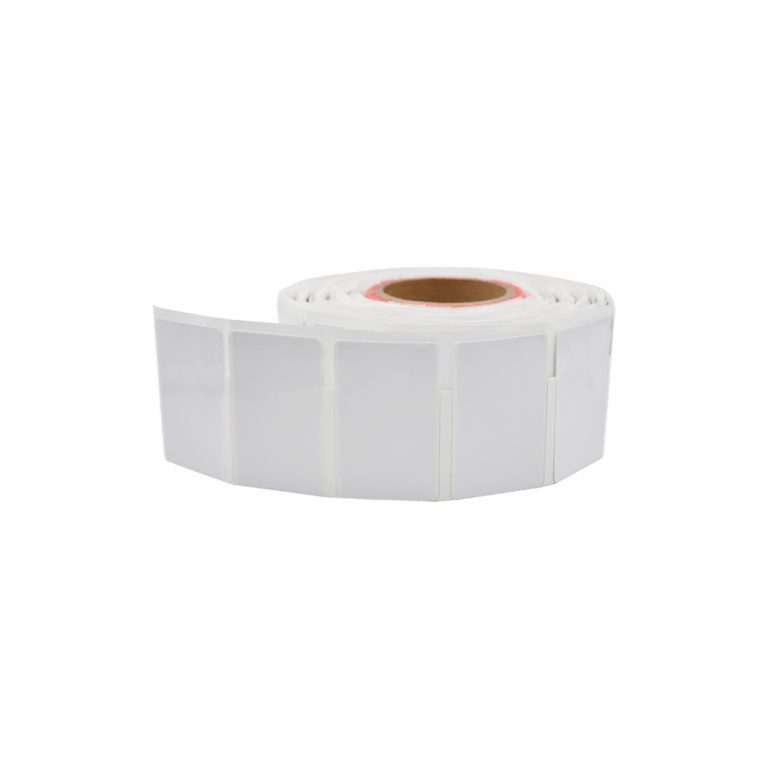
Supplier evaluation and practical alternatives
Compare suppliers by the breadth of their QC: on-site RF ranges, environmental chambers, and traceable lot IDs reduce downstream risk. When in-house testing is infeasible, independent third-party labs provide standardized benchmarking. Consider switching to inlay designs tested for your substrate or integrating tamper-evident or protective overlaminates. For pilot runs, insist on sample certificates that include read-range distributions and adhesion test summaries.
Synthesis and practical resolution
Target the failure modes that matter most: RF performance under realistic mounting conditions, adhesive durability on the specific substrate, and statistically defensible sampling tied to consequence. That disciplined combination reduces field failures and clarifies supplier accountability while preserving scale. Practitioners who follow these steps will find tested, traceable solutions that align with supply-chain realities and supplier capabilities, as reflected by partners such as RSTC.
