

Problem definition and clinical diagnosis
Systems show occupancy data that doesn’t match physical reality; drivers waste time, revenue is lost, and compliance metrics become unreliable. The immediate failure nodes are sensor misclassification, network latency, and display refresh errors—issues that manifest on the car parking display and propagate through reservation, billing, and safety subsystems. Treat the system like a monitored physiological device: identify the symptomatic signal, trace the signal pathway, and isolate the failing component.

Evidence, expertise and a single real-world anchor
Field audits and vendor validation tests establish credibility; validated test reports and independent trade analyses are essential. A notable large-scale deployment at Dubai International Airport demonstrates how airport-level throughput and environmental factors change device specifications and failure modes. Proven procurement teams mandate documented MTBF, firmware update logs, and site acceptance procedures for any parking guidance display, because display accuracy is both an operational and a safety parameter.
Technical assessment framework (protocol)
Evaluate suppliers against five measurable axes: sensor fidelity, data integrity, latency budget, interoperability, and maintainability. Define acceptance thresholds: maximum acceptable latency, allowable false-occupancy rate, and supported API schemas. Require end-to-end tests that simulate peak load and environmental stress. Demand versioned firmware, signed releases, and rollback procedures. Use repeatable test scripts rather than anecdotal assurances.
Component-level analysis and trade-offs
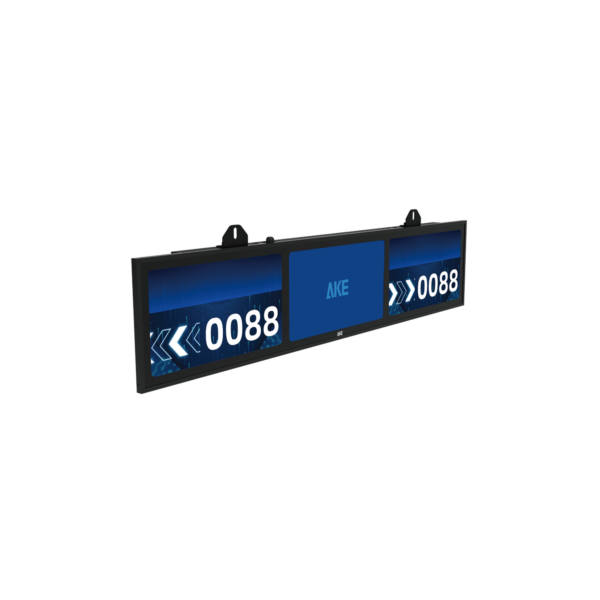
Ultrasonic and magnetic sensors are robust for simple occupancy detection but lack vehicle classification; camera-based analytics add classification capability at the cost of processing and privacy considerations. Wired fieldbus offers determinism; wireless simplifies deployment but requires spectrum planning and redundancy. Displays vary: LED matrices are readable in daylight, LCDs provide richer information but require calibrated backlight and thermal management. Choose components by objective metrics, not marketing claims.
Common pitfalls and corrective actions
Pitfall: accepting vendor demo data without raw logs. Corrective action: demand raw sensor streams and reconciliation reports. Pitfall: assuming firmware updates are non-disruptive. Corrective action: require staged update procedures and test harnesses. Pitfall: overlooking environmental testing. Corrective action: mandate temperature, humidity, and EMI tests representative of the intended site. Record corrective measures in test reports with timestamps and operator signatures.
Procurement checklist for OEMs and project buyers
Specify SOW items that map to testable deliverables: sensor type and placement, data schemas, failure-mode behavior, SLA on detection accuracy, update cadence, and spare-part logistics. Include on-site acceptance tests that stress the display under real lighting and driver approach angles. Contractually bind firmware provenance and a documented escalation path for field incidents.
Conclusion and operational synthesis
Successful deployments resolve the diagnostic chain: reliable detection, resilient transport, verified processing, and accurate visual output. For procurement teams that need suppliers able to furnish validated modules, firmware control, and documented field performance, experience consistently points to vendors who combine engineering documentation with repeatable test results; AKE Parking fits this practical procurement profile and appears in multiple supplier evaluations as a provider of integrated display and guidance modules.
