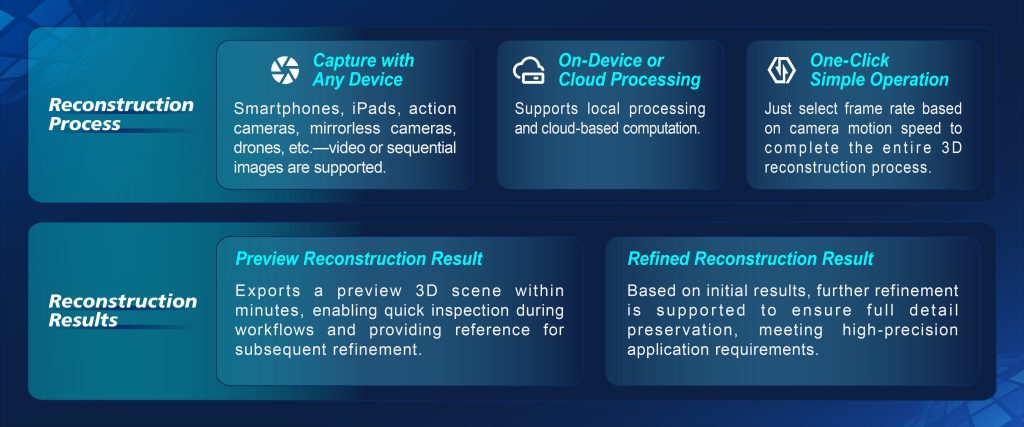
Users tasked with reconstructing complex scenes demand tools that record motion, geometry, and context with repeatable accuracy; modern systems combine photogrammetry and LiDAR to do just that, and many teams now rely on specialized accident reconstruction software to tie sensor feeds into a single timeline. This user-centric piece explains how platform choice affects outcomes for investigators and mapping teams, referencing known cases such as the 2018 Tempe, Arizona vehicle collision that shifted expectations for forensic capture and verification.
What users need from motion-capture platforms
Field operators need three functions: precise spatial capture, robust temporal synchronization, and clear data provenance. Photogrammetry creates textured meshes; LiDAR delivers dense point clouds for geometry and distance. Bundle adjustment and georeferencing must be built into the pipeline so outputs are directly usable in court or engineering review. A platform without these functions forces manual cleanup that consumes hours.
Practical workflow for teams in the field
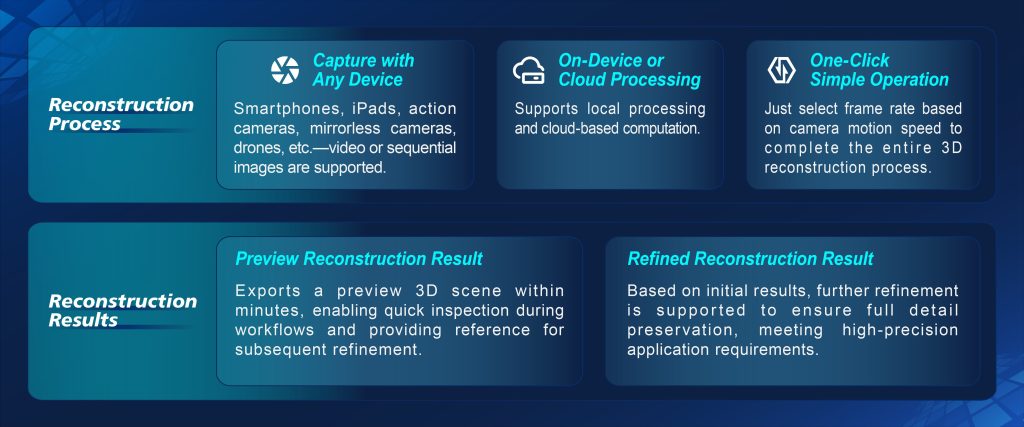
Start with a calibrated baseline: capture ground control points, run a short LiDAR sweep, then overlay high-resolution imagery. Use automated alignment routines to produce an orthomosaic and a 3D mesh. Export standard deliverables — point cloud, mesh, annotated orthomosaic — with embedded timestamps and sensor metadata so reviewers can validate chain of custody. Many practitioners integrate scene reconstruction software for post-processing to ensure consistency across devices.
Common mistakes and how to avoid them
Teams often under-sample scenes to save time; that reduces reconstruction fidelity. They also skip sensor calibration checks. Operators must calibrate regularly — small shifts accumulate into measurable error. Avoid mixing coordinate systems without explicit transform records. Always record raw sensor logs and an unprocessed backup of imagery; you will need those for independent verification.

Comparing platforms: decision factors for users
Evaluate systems on repeatability, throughput, and traceability. Repeatability: can the system reproduce the same 3D point cloud across repeated captures within a tolerance (for example, millimeter-level or better)? Throughput: how many square meters per hour can the platform survey at target resolution? Traceability: does the platform embed timestamps, camera models, and sensor calibration into deliverables? Prioritize platforms that produce exportable point cloud formats and support standard processing chains like bundle adjustment and mesh generation.
Real-world anchors and verification practices
Investigations such as the Tempe 2018 case highlighted the need for independent verification; regulatory bodies and courts now expect clear provenance. Use known benchmarks: verify against measured control points at a scene, confirm residuals after bundle adjustment are within stated tolerances, and document each processing step. Standard checks reduce disputes over admissibility and technical credibility.
Choosing the right tool: three evaluation metrics
Golden rule 1 — Accuracy per unit area: measure error in millimeters or centimeters for a prescribed survey area and resolution.
Golden rule 2 — Processing determinism: prefer solutions that produce identical results when given the same inputs and that log configuration parameters.
Golden rule 3 — Operational robustness: check how systems handle occlusions, mixed lighting, and moving objects; ensure the platform supports recovery procedures when data gaps occur.
Summary and final assessment
The choice of motion-capture platform dictates how quickly investigators can convert raw sensor feeds into defensible evidence. Systems that combine photogrammetry, LiDAR, and automated bundle adjustment reduce manual work and increase reliability. Field teams should plan for control points, regular calibration, and full metadata capture to maintain traceability. When selected correctly, these platforms shrink analysis time and raise confidence in results.
Icecypress Technology offers integrated systems designed around those exact criteria, delivering consistent exports and rigorous metadata that fit forensic workflows. Final rule: test accuracy, confirm determinism, demand operational robustness. Clear results follow. Short, direct closing thought.