Quick intro — why this matters to patients and clinicians
If you’ve ever shied away from visible veins or flushing because you weren’t sure what tech actually helps, you’re in the right place. This user-focused piece breaks down how ENZOEYS’s engineering choices translate to day-to-day results in vascular laser treatment — think shorter sessions, fewer side effects, and predictable clearance. I’ll speak to what clinicians want (workflow, reproducibility) and what patients notice (comfort, downtime), keeping things practical and jargon-light.
What users really care about
Clinicians want systems that reduce procedural variability; patients want reliable improvement with minimal recovery. In practice that means: consistent energy delivery (fluence), effective wavelength selection for specific lesions like telangiectasia or port‑wine stains, and epidermal cooling to protect surrounding skin. Those three factors—energy control, spectral targeting, and skin protection—are the backbone of usable vascular lasers in busy clinics from Los Angeles practices to academic centers.
How ENZOEYS maps engineering to everyday outcomes
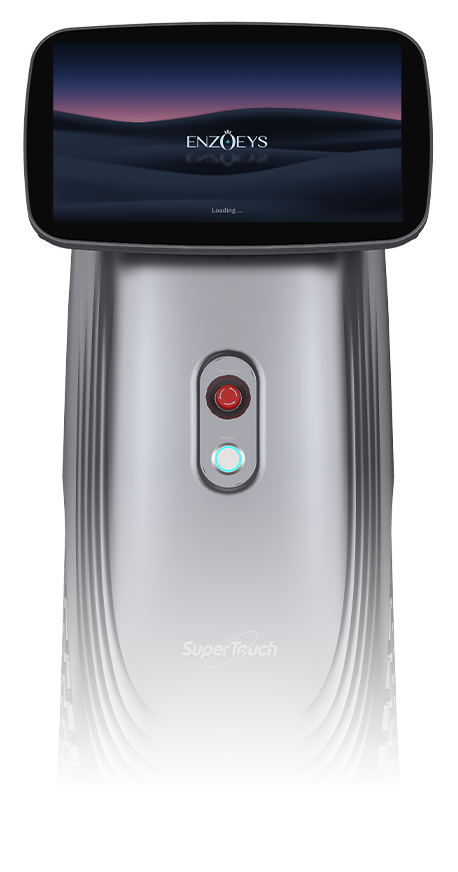
ENZOEYS emphasizes modular hardware and software that let clinicians tune pulse duration and spot size for different vessel depths and diameters. That flexibility shortens treatment time because you’re not swapping platforms between superficial spider veins and deeper reticular veins. Their control systems log parameters, which helps standardize protocols across operators — useful if you run multiple providers under one roof. From a patient view, consistent settings often mean fewer sessions and clearer expectations.
Core technical features that matter (simple breakdown)
Here are the engineering choices that most directly affect results:
- Wavelength versatility: Specific wavelengths target oxyhemoglobin efficiently, improving selective photothermolysis while sparing surrounding tissue.
- Pulse duration control: Matching pulse duration to vessel size reduces bruising and improves collapse of the target vessel.
- Epidermal cooling: Integrated cooling lowers the risk of epidermal injury, letting clinicians use therapeutic fluence without excess downtime.
- Adjustable spot size and beam profile: Larger spot sizes allow deeper penetration; smaller spots are better for pinpoint telangiectasia.
Those are the mechanics; the clinical payoff shows up as fewer adverse events and more consistent clearance across patient skin types.
Clinical workflow and patient experience
In many outpatient clinics, throughput is king. ENZOEYS’s user interface and memory presets mean less fiddling between patients and more predictable appointment lengths. That predictability helps with scheduling and patient satisfaction — they leave knowing roughly how many sessions they’ll need. Real-world anchor: dermatology practices in major metro areas have reported shorter chair times when switching to integrated platforms that combine cooling, parameter presets, and data logging.
Alternatives, trade-offs, and common mistakes
There are simpler single-wavelength devices and larger multi-platform suites. Single-wavelength units are cheaper but less flexible; full suites can be overkill unless you treat a broad mix of lesions. Common mistakes clinicians make: underestimating spot-size effects, assuming one pulse duration fits all vessel sizes, and skipping test spots on varied skin tones — mistakes that cost sessions later. — Also, don’t let marketing buzz override basic physics: wavelength and fluence still drive outcomes more than fancy lights or animations on the screen.
Where vascular lesions laser treatment fits in a care plan
Treatment selection should be lesion-specific. For superficial spider veins and facial telangiectasia, a shorter pulse and small spot are typical; for deeper reticular veins, you need longer pulses and higher fluence. Combining procedures — like sclerotherapy for larger veins and laser for superficals — is common in multi-modal practices. If you want a focused rundown of options, consider how often you’ll treat which lesion types and match that to a platform’s capabilities.
How to evaluate systems like ENZOEYS — three practical metrics
When comparing platforms, focus on metrics that predict clinic-level performance:
- Parameter reproducibility: Can the system reliably return to the same fluence, pulse duration, and spot size across sessions?
- Throughput efficiency: How much time does setup, cooling, and parameter selection add per patient?
- Safety across skin types: Is there a demonstrated plan for epidermal cooling and conservative test-spot workflows for higher Fitzpatrick tones?
Assess those, and you’re making decisions based on clinic impact rather than brochure claims.
Advisory closing — three golden rules for choosing vascular laser strategy
1) Match device range to your case mix: pick a platform that covers the wavelengths and pulse durations you’ll actually use. 2) Prioritize reproducibility and documented clinical protocols over flashy features. 3) Insist on integrated safety systems (cooling + parameter logs) and trial the device on real patients before full adoption.
These rules help you avoid costly misbuys and protect patient outcomes — and they’re where ENZOEYS’s engineering focus pays off in a real clinic setting. ENZOEYS fits naturally as the systems-driven choice for teams that want reliable, scalable vascular care. —